Home / Mumbai-guide / Things To Do / Article /
This walk will uncover the past and present of Mumbai's water system
Updated On: 09 December, 2024 12:19 PM IST | Mumbai | Devashish Kamble
A filmmaker hosts a walk through Mumbai using the history of the city’s waterworks to uncover its influence on the past and present



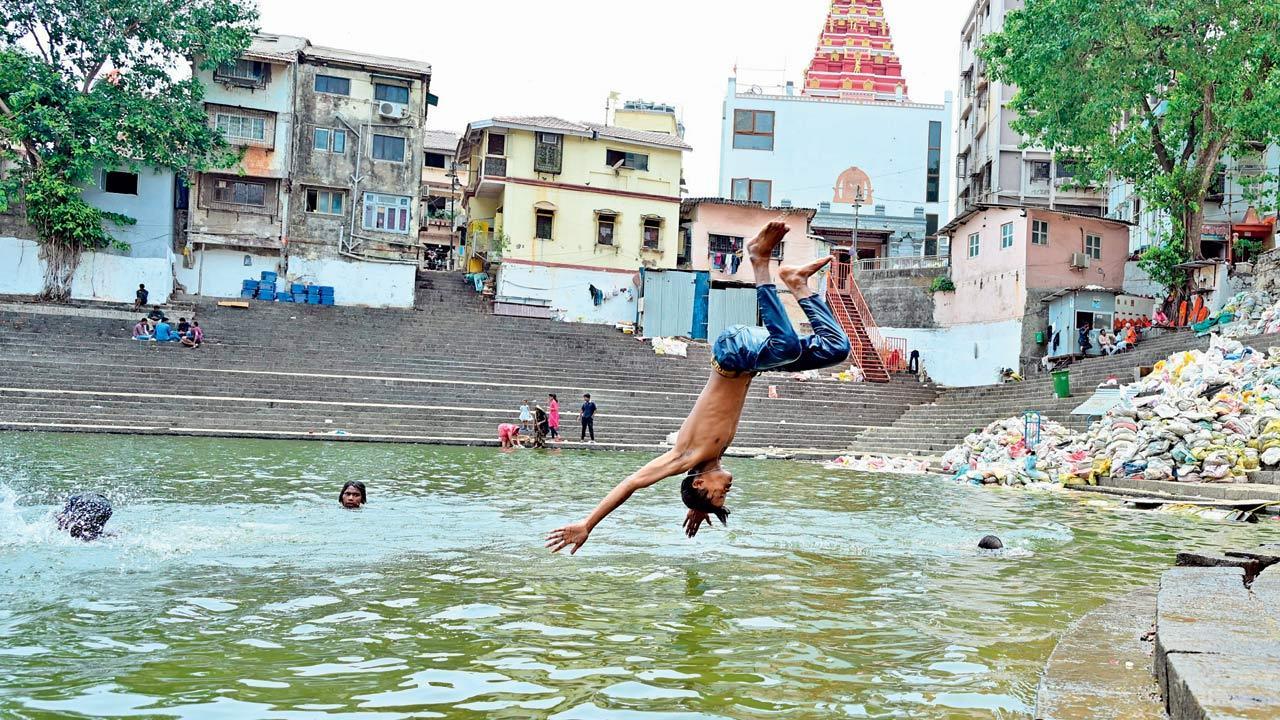
The walk will make a pitstop at Banganga Tank in Walkeshwar. File pic
Can you count the number of taps in your home? You can stop when you reach four, because that’s already more than the entire neighbourhood of Char Nal in Govandi where residents line up for their share of potable water every day. Filmmaker Akanksha Gupta will unveil many such stories of Mumbai’s piped water system, and how it shapes the city’s population, politics, and lifestyle on her walk titled Tracing the Footsteps of Water this Sunday.
Gupta’s walk will begin at Hanging Gardens in Malabar Hill that stands upon one of the two oldest reservoirs of the city (the second being the Bhandarwada reservoir in Mazgaon). These reservoirs were built by the Municipal Water Works that supplied water to the city in the late 1800s. The high elevation of the hill made it the right choice for a reservoir location to cater to the sudden surge in demand for water in the mid-1800s, we learn. “It is only fair to start our walk at the point where water enters the city from the seas and charts its complex journey to quench Mumbai’s thirst,” she says.
 Akanksha Gupta (in green) reads out a Municipal Water Works stone plaque at Hanging Gardens; (right) Kamala Nehru Park offers a view of Cuffe Parade, where the municipal water works terminate
Trending Stories
Latest Photos
Latest Videos
Latest Web Stories
ADVERTISEMENT
Mid-Day Fast
ADVERTISEMENT

ADVERTISEMENT