Home / Mumbai / Mumbai News / Article /
Mumbai: Chikungunya cases see 476 per cent increase compared to last year
Updated On: 02 August, 2025 07:52 AM IST | Mumbai | Ritika Gondhalekar
No. of leptospirosis cases, however, are down; BMC says citizens must take equal responsibility to prevent mosquito breeding in their areas; additionally, dengue cases also saw a rise from 966 between January and July 2024 to 1160 cases in the same period this year



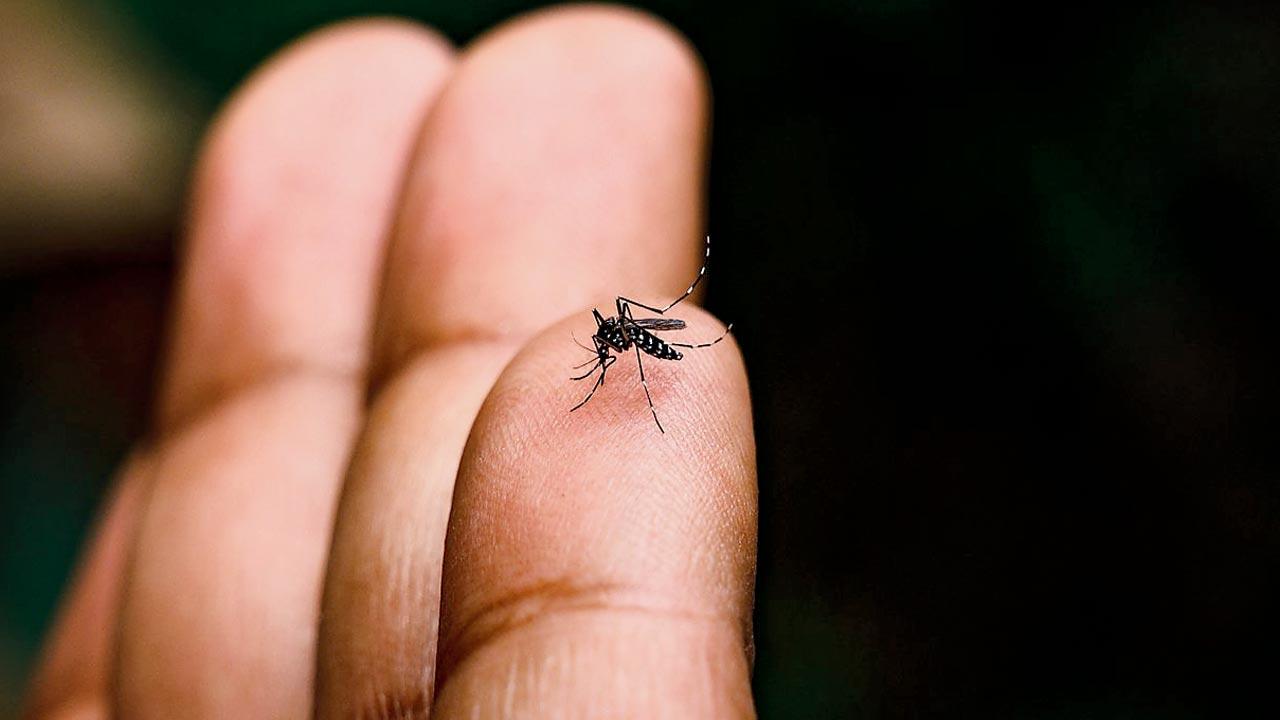
An Aedes albopictus mosquito, vector of chikungunya. Reppresentation pic
The city is witnessing a worrying resurgence of mosquito-borne diseases, with the Brihanmumbai Municipal Corporation (BMC) reporting a staggering 476 per cent rise in chikungunya cases and a 45 per cent jump in malaria cases between January and July, compared to the same period in 2024. While 2852 cases of malaria and 46 cases of chikungunya were reported in this period last year, 4151 cases of malaria and 265 cases of chikungunya were recorded from January and July 2025, respectively. Additionally, dengue cases also saw a rise from 966 between January and July 2024 to 1160 cases in the same period this year.
Why the spike?
While Dr Daksha Shah, executive health officer of the BMC, attributed the overall rise of vector-borne diseases, especially chikungunya to the rise in pollution levels, intermittent rainfall, and the increase in construction activities and sites, medical field experts stated that the nature of chikungunya this year has shown more intensity.
Dr Charudatt Vaity, director, critical care, Fortis Hospital, Mulund, told mid-day, “Aedes mosquito breeding has proven to be an ideal vector for chikungunya. Crowded living situations are one of the major reasons for mosquito proliferation and increased human-mosquito interaction. This year, we are seeing a certain rise in the severity of how chikungunya is presenting, and there are several factors which can contribute to this. Viral loads and sometimes co-infection with other viruses such as dengue and influenza, could also be one of the reasons. Other factors include delay in diagnosis and therapy affecting certain groups of people, such as the elderly or those with comorbidities or patients who have suppressed immunity. Prevent water stagnation, wear full-sleeve clothing, use mosquito repellent and seek medical attention whenever you have symptoms such as high-grade fever, joint pain, and rashes so that correct treatment can be given in the golden period.”
Trending Stories
Latest Photos
Latest Videos
Latest Web Stories
ADVERTISEMENT
Mid-Day Fast
ADVERTISEMENT

ADVERTISEMENT