Home / Mumbai / Mumbai News / Article /
Waste-filled beaches threat to sea turtles for nesting, finds study
Updated On: 30 June, 2025 11:07 PM IST | Mumbai | Ranjeet Jadhav
Olive ridley turtles face growing challenges, primarily driven by human activities and the looming threat of climate change; 60 per cent of beach resorts release sewage, solid waste along the beaches



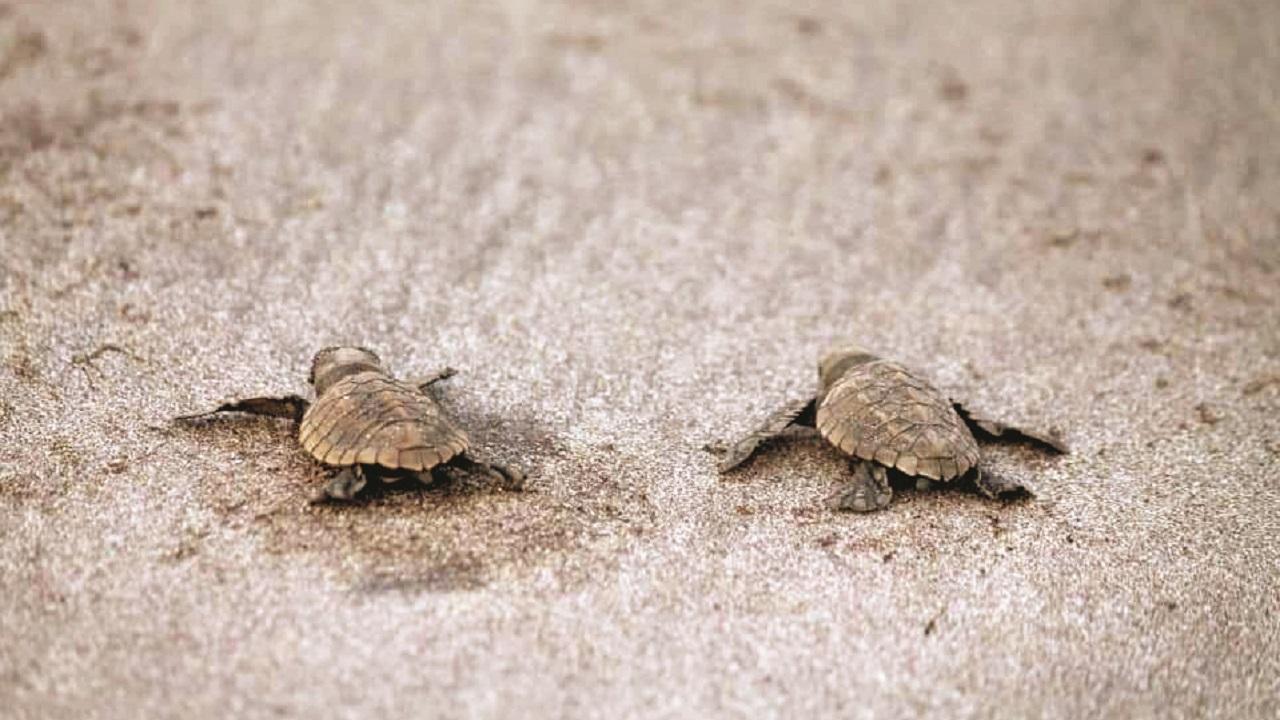
Baby Olive ridley turtles on a beach in Ratnagiri. Pic/AMOL HANDORE (SPECIAL ARRANGEMENT)
The research paper titled “Impacts of Anthropogenic Factors on Nesting Behaviour of Olive Ridley Turtles at Ratnagiri Coast” by Amol R Handore and Ravindra N Bhavare which was recently published in the Journal of Advanced Zoology, has found that while the forest department is taking all the best possible efforts for the conservation of Olive ridley turtles that visit the Maharashtra coast for nesting, the tourist beaches with resorts were avoided by female turtles for nesting.
The study which was conducted between 2019 and 2023 revealed that 60 per cent of beach resorts release their sewage and dump their non-degradable solid waste along the beaches as there is a lack of a proper sewage and garbage disposal system along a few beaches like Murud and Karde.
The study indicates that female turtles avoid nesting on sewage-prone beach stretches. On the other hand, beaches without resorts, or with fewer resorts, showed maximum nesting density.
Trending Stories
Latest Photos
Latest Videos
Latest Web Stories
ADVERTISEMENT
Mid-Day Fast
ADVERTISEMENT

ADVERTISEMENT