Battle cry, Jai Bhim!
Updated On: 14 November, 2021 07:18 AM IST | Mumbai | Meenakshi Shedde
Jai Bhim is a courtroom drama about Rajakannu (K Manikandan), an Irula tribal (traditional snake catcher), whom police arrest in a theft case, even though he was not in town that day.





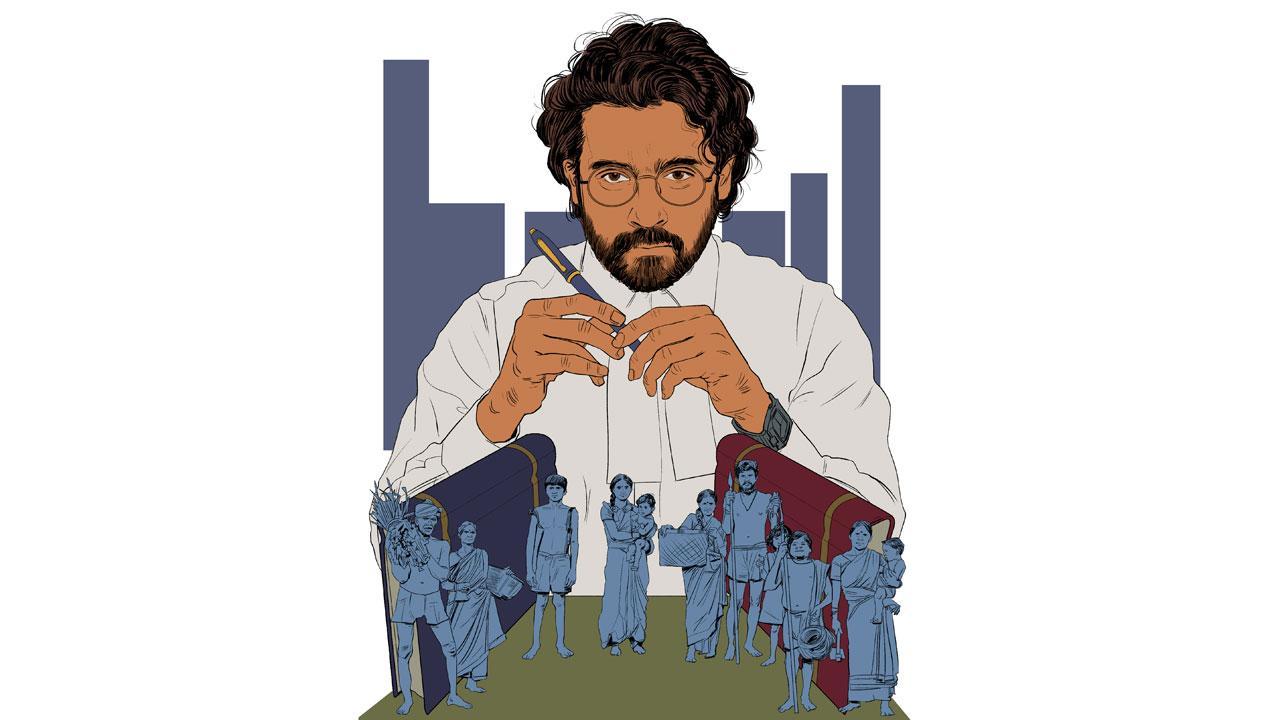
Illustration/Uday Mohite
 There is no doubt that Jai Bhim, now streaming on Amazon Prime Video, is a powerful, important film, that discusses caste atrocities, especially those perpetrated by the police and lawyers. The film, directed by TJ Gnanavel, top-lining Tamil star Suriya, has been produced by Jyotika and Suriya’s 2D Entertainment. Made in Tamil, it has been dubbed in Hindi, Telugu, Malayalam and Kannada. Caste atrocities are a horrific Indian reality, and the more films and awareness they generate, the better. Jai Bhim, though, is what the Tamilians call a “massy” film, with a saviour hero, simplistic good and evil characters, gruesome violence, and high decibel wailing and music, aimed to wring your guilt and sympathy.
Jai Bhim is a courtroom drama about Rajakannu (K Manikandan), an Irula tribal (traditional snake catcher), whom police arrest in a theft case, even though he was not in town that day. His pregnant wife Sengani (Lijomol Jose) is desperate to find him. Brutally tortured in police custody, he “disappears,” whereas the police insist he escaped from custody. Thanks to a saviour-lawyer and Communist sympathiser Chandru (Suriya), Sengani files a case that exposes multiple police caste atrocities. Spoiler ahead: Refusing a police bribe to withdraw the case, she gets the police convicted and later, is even allotted a house. Spoiler ends. Lacking identity and caste cards, and proof of address, many marginalised communities are unable to benefit from welfare schemes. The film is inspired by the work of Justice K Chandru, former judge of the Madras High Court.
Trending Stories
Latest Photos
Latest Videos
Latest Web Stories
ADVERTISEMENT

Ganeshotsav 2026

ADVERTISEMENT