Gods of the week
Updated On: 05 December, 2021 07:24 AM IST | Mumbai | Devdutt Pattanaik
The ancient Mesopotamians valued seven days because seven celestial bodies could be seen in the sky against the twinkling stars: the sun, the moon, Mars, Mercury, Jupiter, Venus and Saturn. Each day was dedicated to these gods, with the sun and the moon playing the role of creator gods





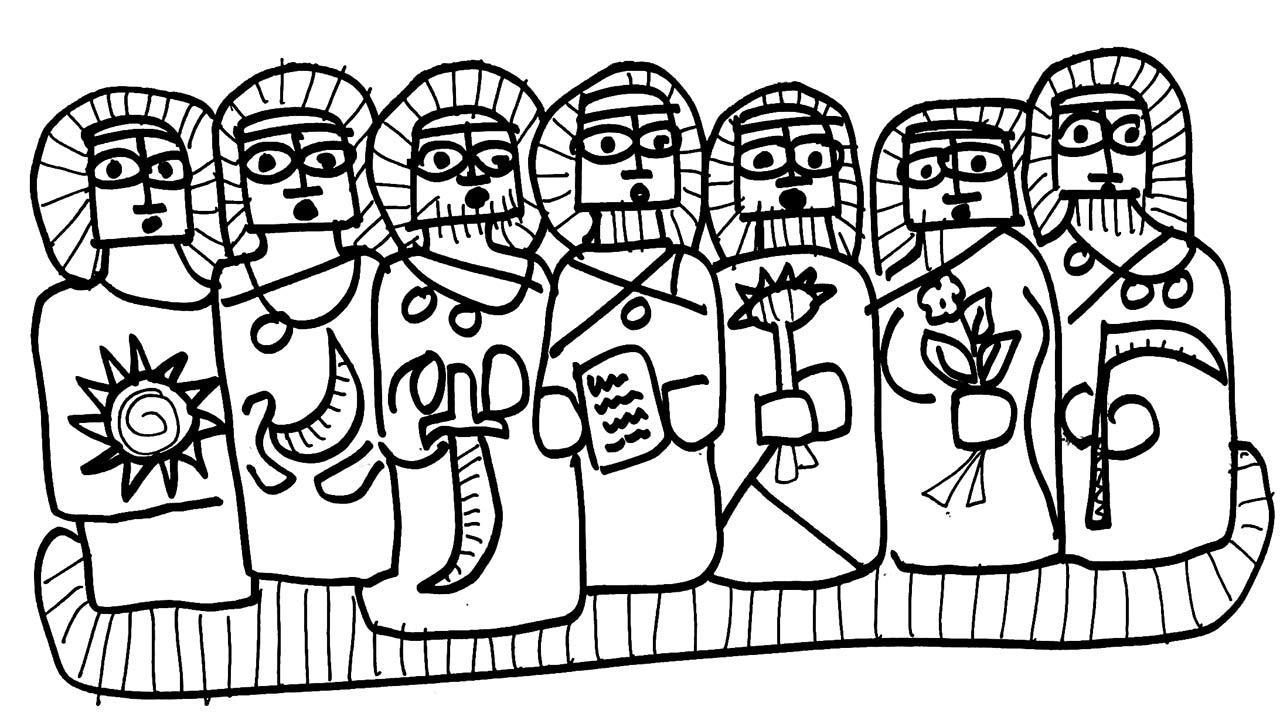
Illustration/Devdutt Pattanaik
 The seven-day-week is not based on any natural phenomena. The ancient Mesopotamians decided that the 7th, 14th, 21st and 28th days after the new moon were days of rest and that is how the concept of the week began. Sumerians believed that the gods flooded the earth for seven days and a new world began afresh when that seven days ended. Later, Babylonians wrote how gods created laws written in seven tablets over seven days. So, in Mesopotamian art we find images of seven gods, and in architecture we find seven rooms dedicated to these gods.
This idea later influenced the Persians, then Greeks, then Romans, and eventually, through trade routes, travelled to India during the Gupta period and China during the Tang period. So by 5th century, the idea of a seven day week had reached India. That is why the week does not figure in Vedic literature, but starts appearing in later Puranic and folk literature. So the idea of fasting on Mondays, Thursdays and Fridays or Saturdays are later Hindu practices. Originally, all practices were linked to the phases of the moon (tithi) and the movement of the sun relative to the stars.
Trending Stories
Latest Photos
Latest Videos
Latest Web Stories
ADVERTISEMENT

Ganeshotsav 2026

ADVERTISEMENT