Needling into conceptual heft
Updated On: 26 January, 2025 07:28 AM IST | Mumbai | Shweta Shiware
Historically regarded as secondary, embroidery—like women’s roles—has been considered decorative. Surface, an ongoing exhibition by the Sutrakala Foundation in Jodhpur, elevates Indian embroideries from domestic craft to high art, redefining their conceptual depth



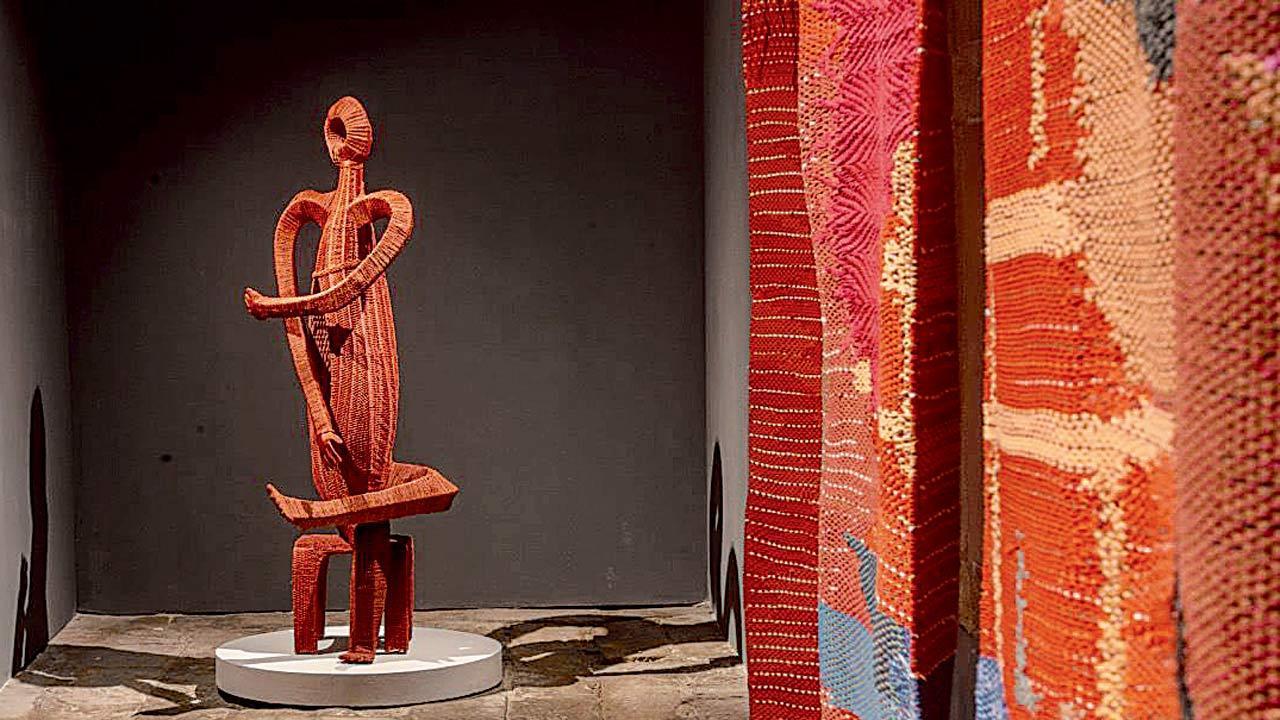
Aravalli II (2024), flanked by Aravalli I (2024), by Karishma Swali of the Chanakya School of Craft, is inspired by the Aravalli hills. These works blend hand-weaving, embroidery, and sculpture to honour the unspoken connections between Jodhpur’s land and its communities. Courtesy/Chanakya School Of Craft
 Embroidery and surface decoration have long been dismissed as a “genteel hobby”—a passive, feminine pursuit tied to traditional roles of obedience and domesticity. Often relegated to tasks like mending clothes, adding decorative touches, or preparing a bride’s trousseau, embroidery was seldom recognised as a serious practice. This is, perhaps, a glaring reflection of the institutional bias in the art world.
Yet, handcrafted textiles have always been central to social and trade networks. From royal embroideries like zardozi and aari, influenced by Persian and Central Asian styles, to temple hangings from Gujarat and Tamil Nadu, these creations symbolised power and prestige, crafted by men and backed by patronage.
Trending Stories
Latest Photos
Latest Videos
Latest Web Stories
ADVERTISEMENT
Mid-Day Fast
ADVERTISEMENT

ADVERTISEMENT