Study of myths: How has Mythology evolved over the years
Updated On: 14 November, 2021 03:51 PM IST | Mumbai | Devdutt Pattanaik
Students of mythology classified myths in different ways.





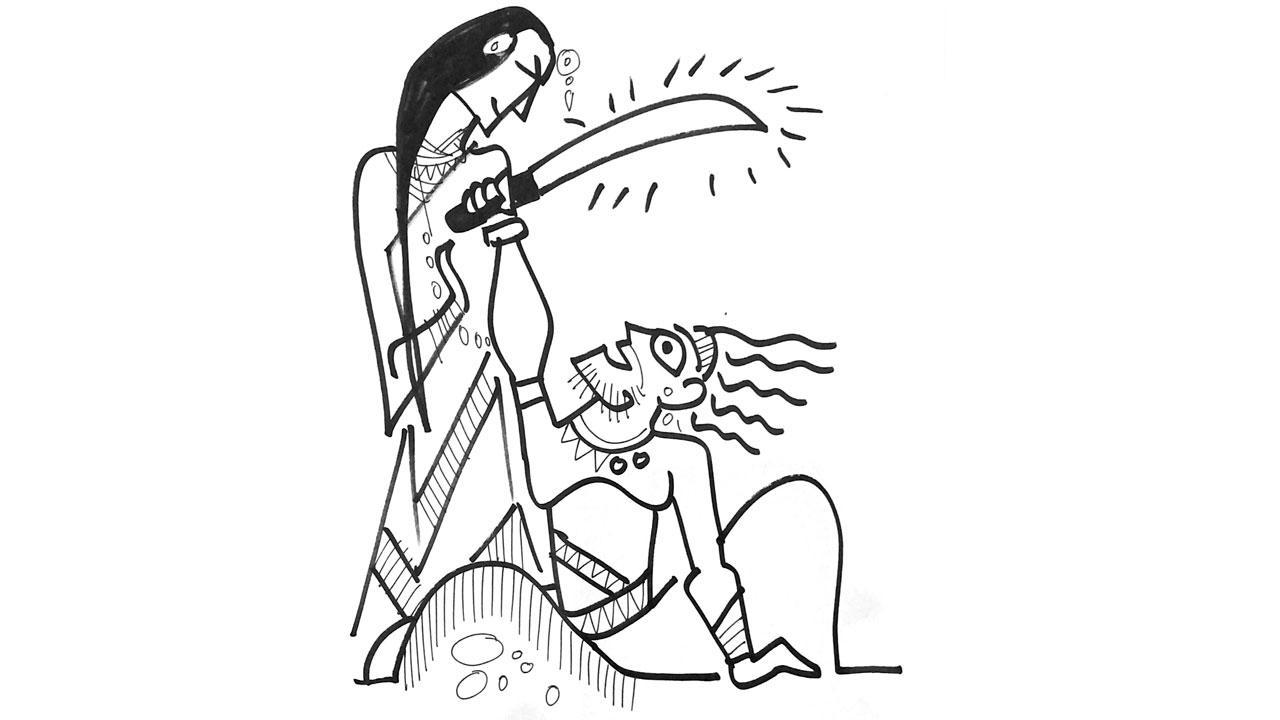
Illustration/Devdutt Pattanaik
 The subject of mythology emerged in the 19th century as the world discovered the subject of history. Before that, memories, legends, myths, parables, folklore and history were all bundled together in one basket. In the 19th century, the scientific study of the past began. History demanded evidence and critical thinking. Greater value was placed on material artefacts, epigraphy and archaeology. Less importance was given to texts. Before this period, Noah’s Ark, Moses, and the story of Jesus Christ, were all seen as history. With the rise of history based on science, these were challenged as there was no evidence to prove the existence of Noah’s Ark, or the exodus of Moses, or the virgin birth of Jesus. They were bundled under mythology.
Students of mythology classified myths in different ways. There was cosmology, how space imagined. In Jain Mythology, we talk about various layers of swarga as realms of plenty and various layers of naraka as realms of scarcity. Then there was cosmogony, how the world came into being. In Christian myths, God created the world out of nothingness. In Chinese myths, the body of a great old giant called Pangu transforms into the mountains, and the seas and the winds.
Trending Stories
Latest Photos
Latest Videos
Latest Web Stories
ADVERTISEMENT

Ganeshotsav 2026

ADVERTISEMENT