Was Harappan civilisation Hindu?
Updated On: 28 November, 2021 07:18 AM IST | Mumbai | Devdutt Pattanaik
Harappans were very different from the Vedic people—they were urban, preferred trading and had no armies, while the Vedic people were pastoral, preferred raiding and war





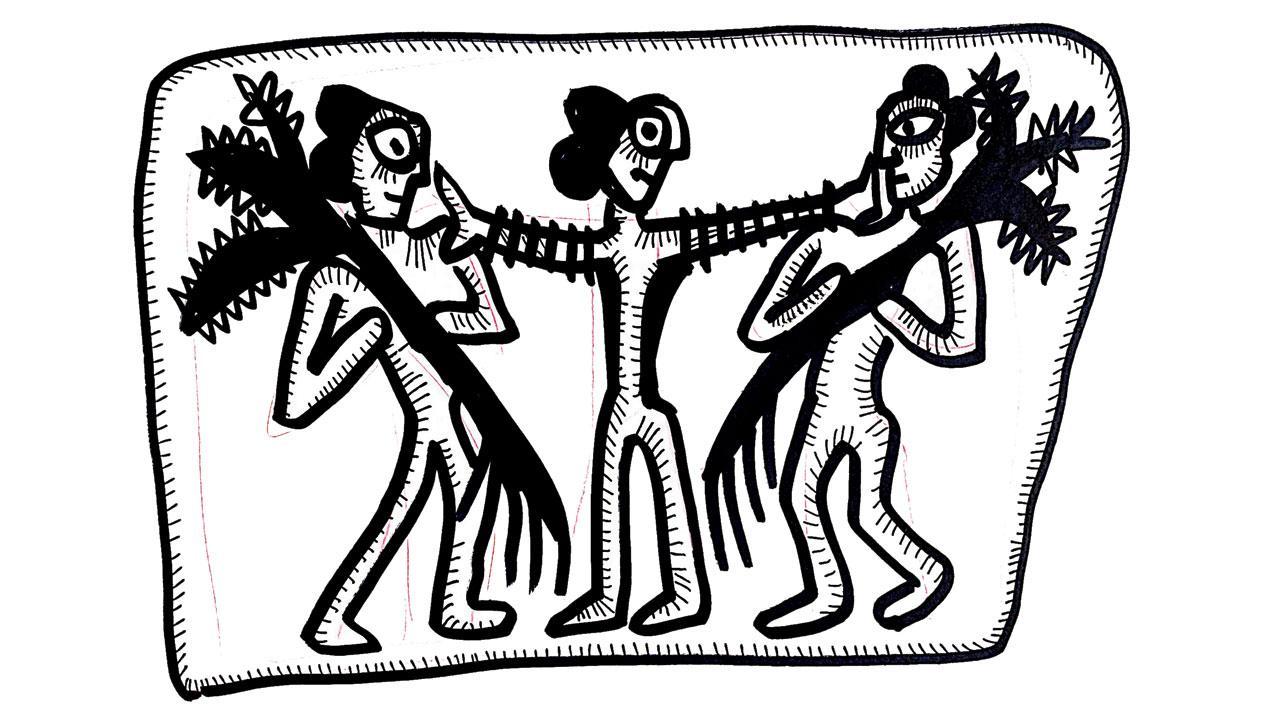
Illustration/Devdutt Pattanaik
 We often trace the origin of Hinduism to Rig Veda, dated to 1,500 BCE. But the Rig Veda contains ideas that we can trace to Harappan civilisation. For example, Rig Veda mantra 8.47.17 refers to a measurement system based on increase by a factor of two (1, 2, 4, 8,16) also found in Harappa. How is that possible? Harappan cities ceased to exist five centuries before the Aryans arrived. Also, Harappans were very different from the Vedic people—they were urban, preferred trading and had no armies, while the Vedic people were pastoral, preferred raiding and war.
It is possible this happened because Aryans who immigrated were mostly men and so, probably married women from post-Harappan cultures with memories of Harappan ideas. As Hinduism emerged in later times, we find it full of ideas that are only partly traceable to Vedic ideas. In Harappan seals we find ideas that are still valued today by Hindus and Indians in general.
Trending Stories
Latest Photos
Latest Videos
Latest Web Stories
ADVERTISEMENT
Mid-Day Fast
ADVERTISEMENT