Home / News / World News / Article /
Hippos survived in central Europe until 31,000 years ago, new fossil study revea
Updated On: 13 October, 2025 09:18 AM IST | Berlin | Agencies
New research shows hippos lived in central Europe’s Upper Rhine Graben between 47,000 and 31,000 years ago, surviving far longer into the last ice age than previously believed. Fossil evidence overturns prior assumptions that they vanished 115,000 years ago



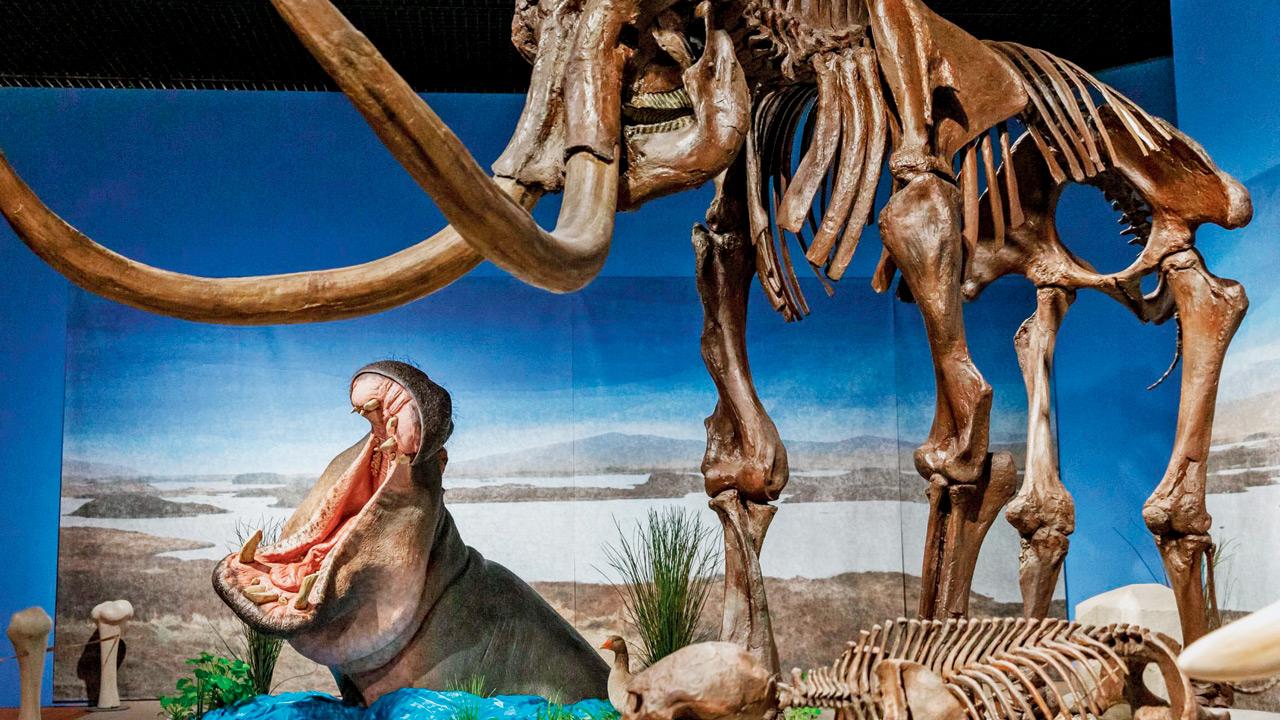
Hippos lived at the Upper Rhine area. PIC COURTESY/Rebecca Kind
Hippos, which today live only in sub-Saharan Africa, managed to survive in central Europe much longer than scientists once thought. New analyses of fossilized bones reveal that these animals lived in the Upper Rhine Graben between roughly 47,000 and 31,000 years ago, during the midst of the last ice age. For decades, scientists believed that common hippos disappeared from central Europe about 115,000 years ago, marking the end of the last interglacial period.
However, the new research, led by experts from the University of Potsdam, the Reiss-Engelhorn-Museen Mannheim, the Curt-Engelhorn-Zentrum Archäometrie Mannheim, ETH Zurich, and other international collaborators, reveals that hippos continued to inhabit the Upper Rhine Graben in what is now southwestern Germany between approximately 47,000 and 31,000 years ago. This means they endured far into the last ice age, surviving in a region once believed too cold for such heat-loving animals.
Trending Stories
Latest Photos
Latest Videos
Latest Web Stories
ADVERTISEMENT
Mid-Day Fast
ADVERTISEMENT

ADVERTISEMENT