Home / Sunday-mid-day / Article /
Sex in the lab: Unravelling the secrets of sex and sexuality the scientific way
Updated On: 03 September, 2023 08:00 AM IST | Mumbai | Jane Borges
Leading neuroscientist Simon LeVay’s fascinating new book says sexual orientation could be determined by genes, why lizards get by without sex, and how oxytocin and vasopressin could be key to falling in love





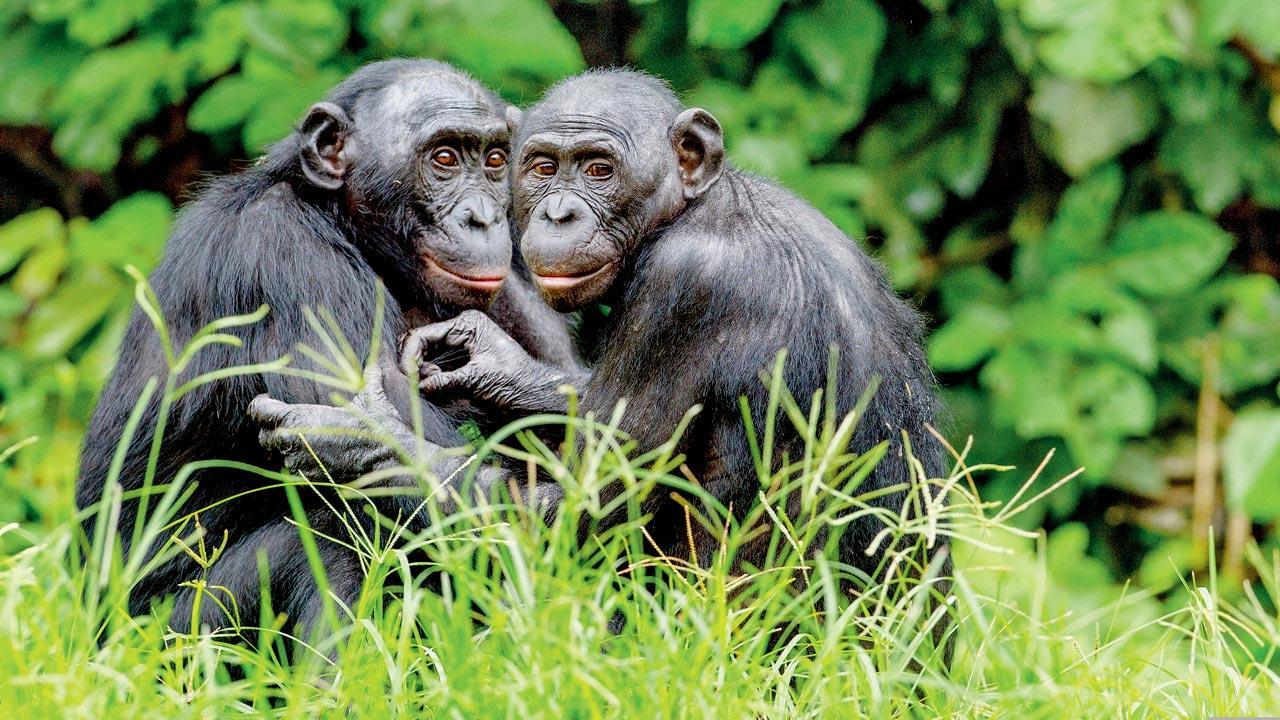
Research shows that among bonobo or pygmy chimpanzees, who engage in a great deal of sex, such sexual behaviour helps resolve conflicts, which allows natural resources to be shared more efficiently among them
Science might not have all the answers, but when it comes to seeking truths about sex, British-American neuroscientist Simon LeVay feels that the “scientific method is the best way forward”. LeVay, who has served on the faculties of Harvard Medical School, Boston and the Salk Institute for Biological Studies, California, is best known for his sensational 1991 report that documented a tiny difference in brain structure between homosexual and straight men. His research pointed to how a tiny cell cluster in the brain, known as the third interstitial nucleus of the anterior hypothalamus, or INAH3, which “is deeply involved in regulating male-typical sex behaviour,” was bigger in straight men; the gay men’s cell clusters were in the same size range as women’s. A feature published in the Discover Magazine in 1994, claimed that the study had “catapulted him [LeVay] from his scientific ivory tower into the heated fray of homosexual politics”.
Nearly 32 years later, his fame notwithstanding, LeVay remains just as deeply invested and curious about research around sex and human sexuality. His just-released title Attraction, Love, Sex: The Inside Story (Bloomsbury India) reveals how, world over, scientists like him are unravelling the secrets of sex and sexuality, and in the process, shattering traditional ideas and prejudices. “Much of the research on sexuality is published in academic papers that are difficult for non-scientists to access or understand,” he tells mid-day in an email interview. “Yet buried in this enormous body of research are clues to some important mysteries about sex.” With his new book, LeVay says he wanted to describe the progress that is being made in finding the answers.
Trending Stories
Latest Photos
Latest Videos
Latest Web Stories
ADVERTISEMENT

Ganeshotsav 2026

ADVERTISEMENT