Home / Sunday-mid-day / / Article /
The forest feeds a taste of Kodagu
Updated On: 01 June, 2025 09:07 AM IST | Mumbai | Nasrin Modak Siddiqi
Sunday mid-day explores the diverse, ancestral culinary traditions of the Kodava community, deeply rooted in Coorg’s forests, fields, and culture



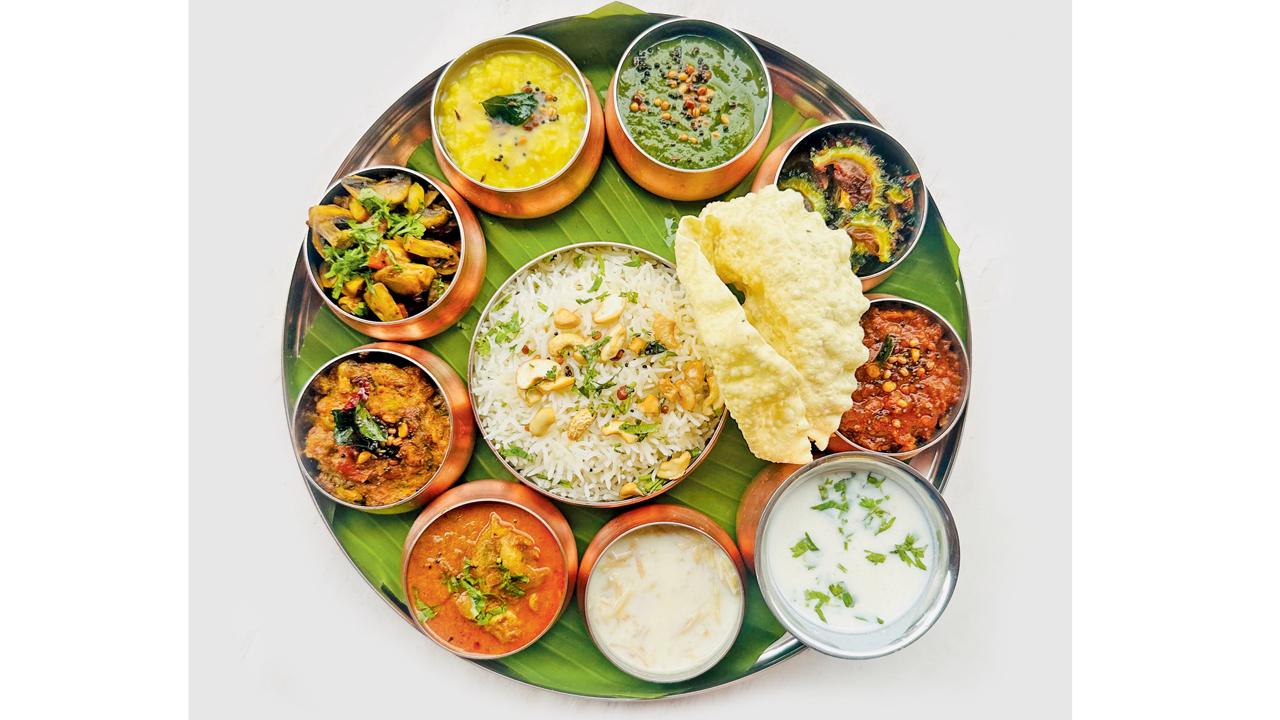
Balekkai Kootu, Anabe Barthad, Tarkari Gasi, Ney Choru, Koli Saaru, Semiya Payasam, Neer More, Coorgi Mutton Curry, Hagalakayi Palya and Soppu Charu
At 7 AM, we set out on a walk through Makkandur Forest in Madikeri, Coorg. Mist-covered hills and sprawling coffee plantations framed our path, with the gentle songs of birds accompanying us on this immersive journey into the rich biodiversity of the Western Ghats — a UNESCO World Heritage Site. Makkandur is home to rare trees and bird species, offering sweeping views of Coorg’s countryside dotted with tropical evergreens, wild ferns, and medicinal plants. The region is home to hundreds of unique species, including over 350 types of birds, reptiles, insects, and amphibians. Among them are vividly coloured cobras and vipers, striking turquoise butterflies, and palm-sized crimson snails with gleaming black shells. Larger inhabitants include elephants, bison, barking deer, wild boar, and the rare, elusive tiger. Along the trail, black pepper — though cultivated — thrives naturally in the forest’s microclimate alongside cardamom and vanilla vines, which are occasionally found growing wild. Tree trunks, often cloaked in moss, lichens, and ferns during the monsoon, host blooming epiphytic orchids clinging to misty branches. This is Kodagu’s wilder side: untamed, meditative, and deeply intertwined with nature — a place where you can still hear the forest breathe.
Here, we plucked four avocados hanging from the tree.
Trending Stories
Latest Photos
Latest Videos
Latest Web Stories
ADVERTISEMENT
Mid-Day Fast
ADVERTISEMENT

ADVERTISEMENT