Home / Entertainment / Bollywood News / Article /
Ajeeb Daastaans director Neeraj Ghaywan: Essential to speak about this bias
Updated On: 19 April, 2021 08:23 AM IST | Mumbai | Uma Ramasubramanian
Highlighting caste divide in his story in Ajeeb Daastaans, director Neeraj Ghaywan says film mirrors prejudices seen in offices, other walks of life.



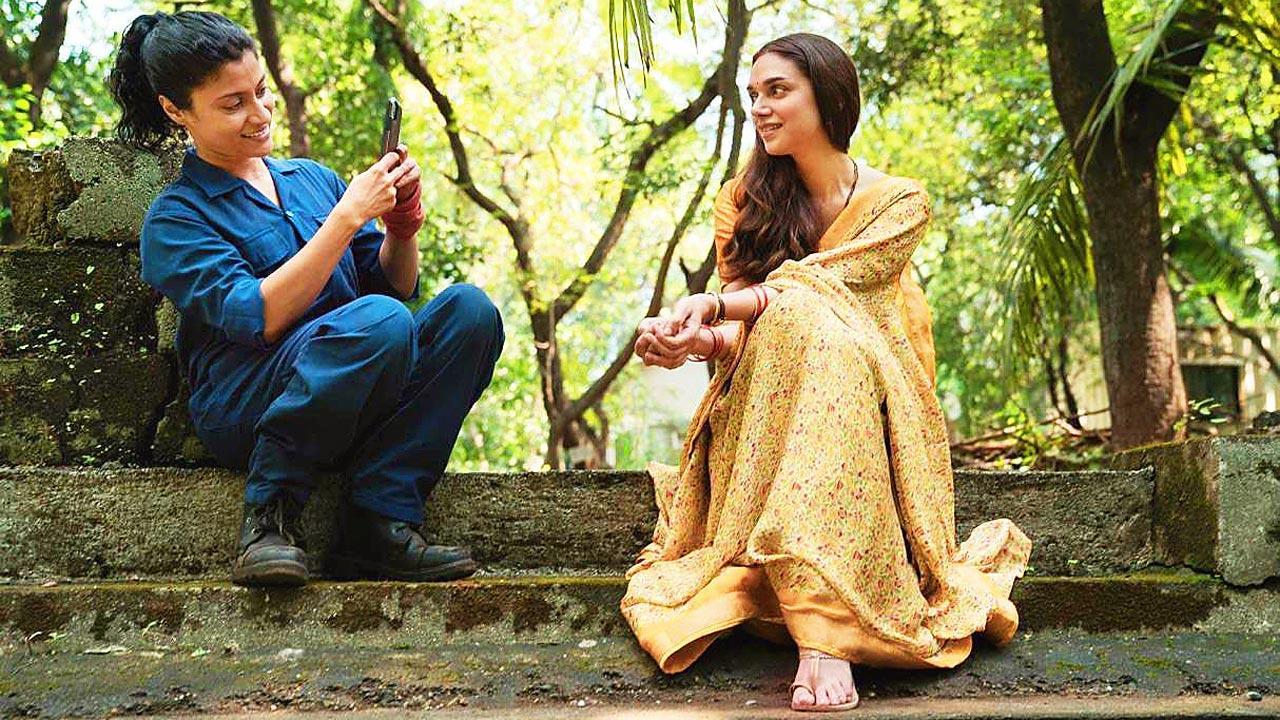
Konkona Sensharma and Aditi Rao Hydari in the short film
Rarely has a steel tea-cup been used to such great effect. Or for that matter, a glass cabin, as Konkona Sensharma stands outside, looking in at the world she’ll probably never be a part of. With her character at the centre, director Neeraj Ghaywan has woven a delectable tale of queer love, gender, and caste conflict, showing how one influences the other — sometimes subtly, and at other times, brazenly — in Ajeeb Daastaans.
Ghaywan’s first feature film, Masaan (2015), too explored the rampant caste divide in our society. Asked if the country has come a long way since then, he says, “I feel things are the same since Masaan. My idea was not to address a particular subaltern, but to look at everything in the context of intersectionality. In Geeli Pucchi [his short film], you also see patriarchy, gender, caste and class.”
 Neeraj Ghaywan
Trending Stories
Latest Photos
Latest Videos
Latest Web Stories
ADVERTISEMENT
Mid-Day Fast
ADVERTISEMENT

ADVERTISEMENT