






Home / Entertainment / Bollywood News / Article /
Jhund Movie Review: Empathy’s the ultimate goal!
Updated On: 04 March, 2022 07:21 AM IST | Mumbai | Mayank Shekhar
What you observe throughout the film are strong yet subtle statements on caste and religion, identity and politics, anonymity and hierarchies

Listen to this article :
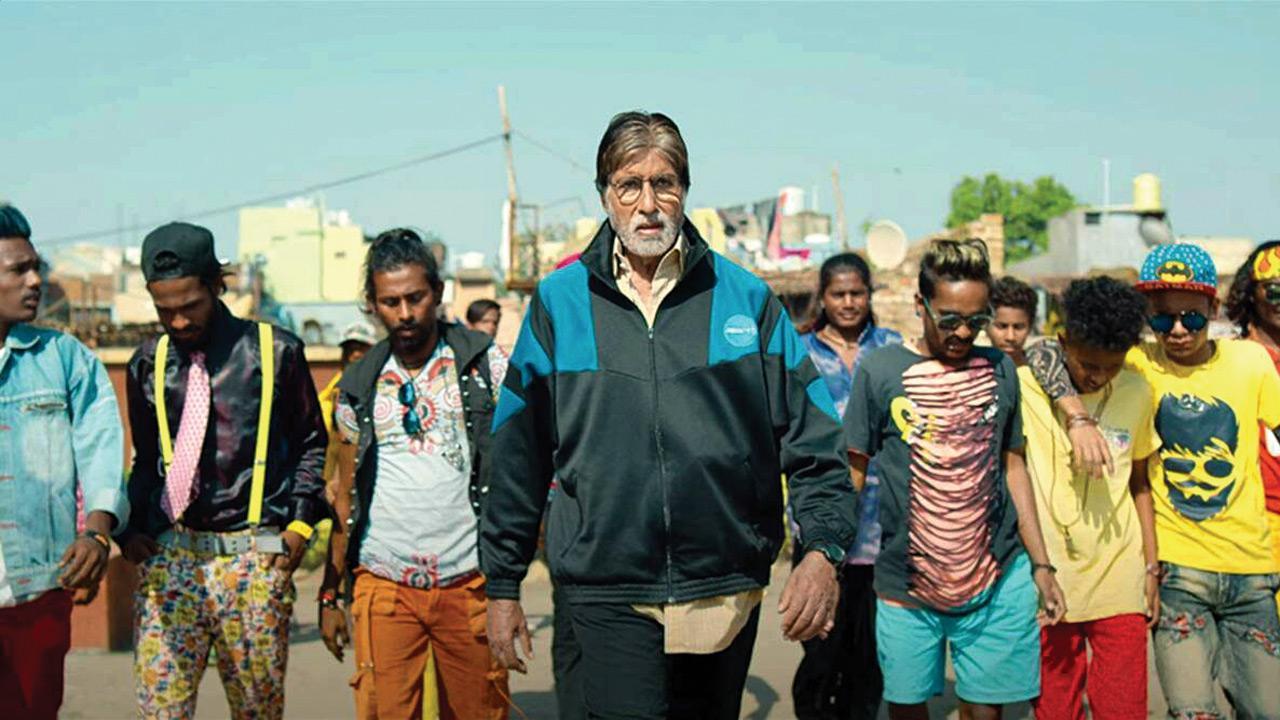
Jhund
Jhund
U/A: Biography, drama
Dir: Nagraj Popatlal Manjule
Cast: Amitabh Bachchan, Ankush Gedam, Priyanshu Kshatriya
Rating: 3/5
Totally love the title, Jhund. It literally means a pack, in reference to animals, usually. They’re anonymous (to humans), by nature. By which one implies here: a large group of equally replaceable, generic, invisible, voiceless men and women. That is precisely what the poor in India (or Third World in general), look like, when observed from a distance.
In fact that’s probably the point of this picture itself —to put a face to the faceless. Which the upper-class eyes are trained to look through; mainly on the streets, but otherwise too. Writer-director Nagraj Manjule zooms in, allowing the camera to linger on some faces, for just a little bit longer — just so they register among audiences.
Read Next Story
Trending Stories
Latest Photos
Latest Videos
Latest Web Stories
ADVERTISEMENT
Mid-Day Fast
ADVERTISEMENT

ADVERTISEMENT