






No time to rest: How India’s tireless campaigners battle activism fatigue
Updated On: 29 March, 2022 10:21 AM IST | Mumbai | Sarasvati T
Talking about caste, feminism, sexuality, disabilities -- invisible from mainstream narratives – is often met with hate on social media. Individuals who are vocal about issues of marginalised groups and failings of the state, tell us about the cost of their political work and how they carry on being hopeful

Listen to this article :
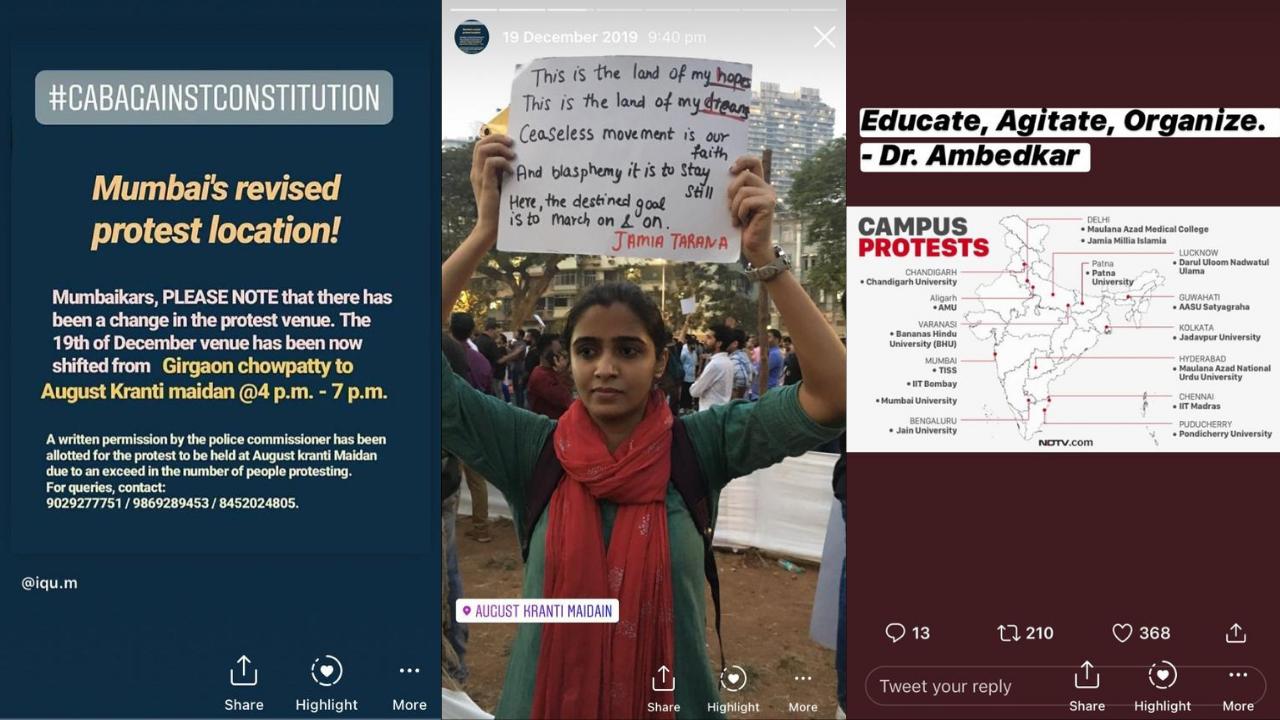
Anti-CAA NRC protests amplified on Instagram stories in 2019. Image credit: Sarasvati T
“I feel like social media doesn’t allow people from marginalised communities to use it just for fun. All the hate propagated through social media forces us to share or do certain things and we are never able to use the platform for fun,” says Divya Kandukuri, writer, anti-caste activist and co-founder of The Blue Dawn, a mental health support group for people from marginalised communities. “Though it may seem trivial, there is this constant pressure to be active and put our point across. Online and offline activism go hand in hand, and I feel the lines get blurred sometimes.”
Activism ‘burnout’ is real. Constant engagement with social and political issues, particularly on social media platforms that are known to be fickle, brings in multiple vexing challenges. ‘Troll’ culture, hate speech in terms of triggering comments, obnoxious direct messages, hashtags meant to demean a community and indirect attacks in the form of censorship are only a few. All of these impact the mental wellbeing of young activists who are at the receiving end and often find it hard to switch off.
Buy now to read the full story.
For any queries please contact us: E-mail: support@mid-day.com
Read Next Story
Trending Stories
Latest Photos
Latest Videos
Latest Web Stories
ADVERTISEMENT
Mid-Day Fast
ADVERTISEMENT

ADVERTISEMENT