






There’s more to laal math than meets the eye, say Mumbai chefs
Updated On: 09 February, 2022 10:44 AM IST | Mumbai | Nascimento Pinto
Fresh amaranth leaves, popularly known as laal math, have hit the market in abundance. While not as loved as other leafy vegetables, three city chefs believe, based on experience and experimentation, that there is a lot of potential in this seasonal ingredient

Listen to this article :
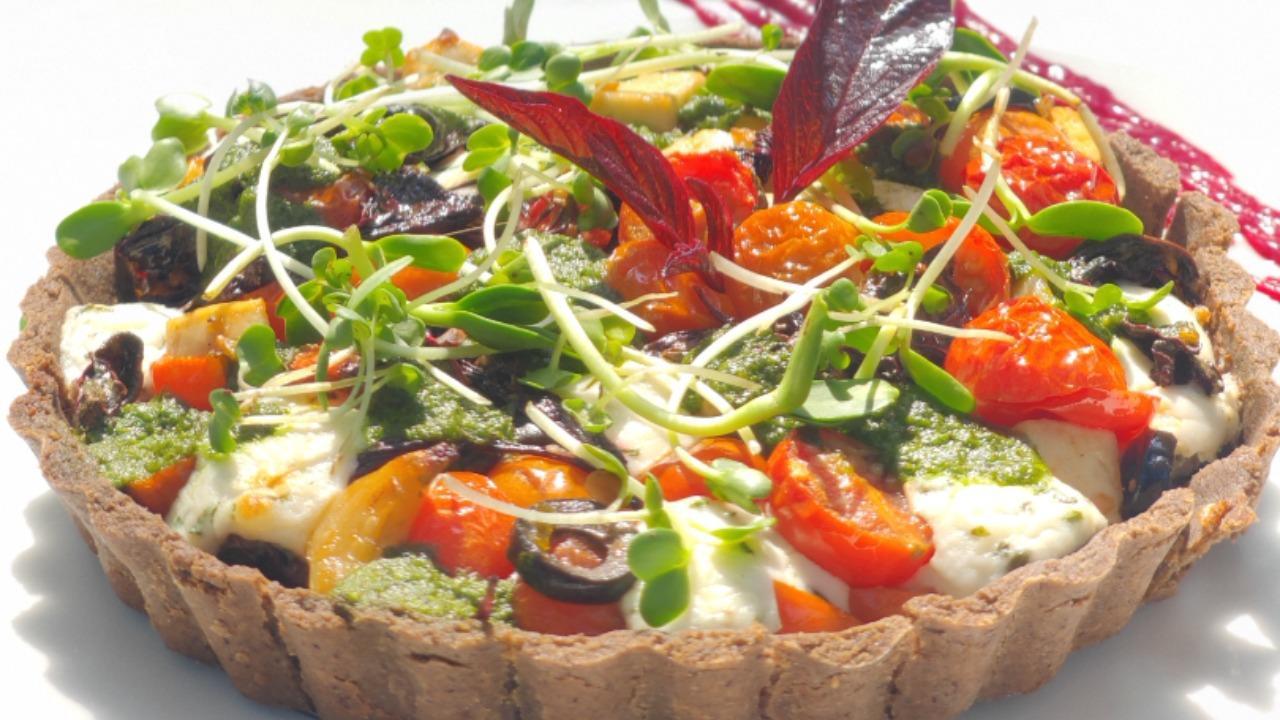
Believing in its true potential, Chef Shailendra Kekade at the newly-opened Sante Spa Cuisine in Khar makes use of the vegetable in a dish called Amaranth Beet and Cherry Tomato Tart, as the star ingredient. Photo: Sante Spa Cuisine Khar
For Oshiwara-based home chef Nandini Deb, amaranth leaves or laal saag, as it is popularly known in Bengali, has a special place in her family and home. “Every day, somebody from my family is making saag in some way,” she says. Even on the day this writer spoke to Deb, her mother, whom the 30-year-old had talked to earlier in the day on the phone, told her she had made laal saag at their home in Kolkata. For the last two years in Mumbai, Deb has been running a delivery kitchen called Bangali Babu, together with her fiancé Nirban Goswami, that dishes out authentic Bengali cuisine. The traditional Bengali thali on her menu includes saag because “the experience is incomplete without it”.
Amaranth leaves or laal math, as the name goes in Maharashtra, are currently in season and spotted across vegetable stalls in the city. Lurking among the different shades of green leafy vegetables, its maroon hue is hard to miss. Three chefs vouch for the leaves, which although used in several Indian cuisines are not as widely accepted as should be the case. Laal math just needs to be made right, they say.  Nandini Deb says laal saag is used to make a variety of dishes in Bengali cuisine including laal saag bhaja, stir-fried laal saag and more. Photo: istock
Experimenting with versatility
Deb, who believes the ingredient is actually quite versatile, shares that laal saag is one of the most common saags in any Bengali household and is prominently used as a side-dish. “We usually have it with our meal with dal and saag on the side. It is made as a laal saag bhaja (amaranth leaves fritters), stir-fried laal saag made with ginger and garlic eaten during the winters to beat cold and cough.” Apart from that, laal saag is also eaten with chingri bhapa (prawns), begun (brinjal), potatoes and posto (poppy seeds). She also feels that has become a part of the cuisine because of its all-in-one nutritional value, unlike other saags. “The taste is not bitter and is actually milder than other saags. So, when it is tossed in garlic or ghee, it tastes divine,” adds the home chef.
Buy now to read the full story.
For any queries please contact us: E-mail: support@mid-day.com
Trending Stories
Latest Photos
Latest Videos
Latest Web Stories
ADVERTISEMENT
Mid-Day Fast
ADVERTISEMENT

ADVERTISEMENT