






Home / Mumbai-guide / Mumbai Food / Article /
How India's coastal communities celebrate breadfruit during the monsoon season
Updated On: 01 August, 2025 09:02 AM IST | Mumbai | Nasrin Modak Siddiqi
For many of India’s coastal communities, breadfruit isn’t just food — it’s a seasonal ritual, a link to family, tradition, and a way of life

Listen to this article :
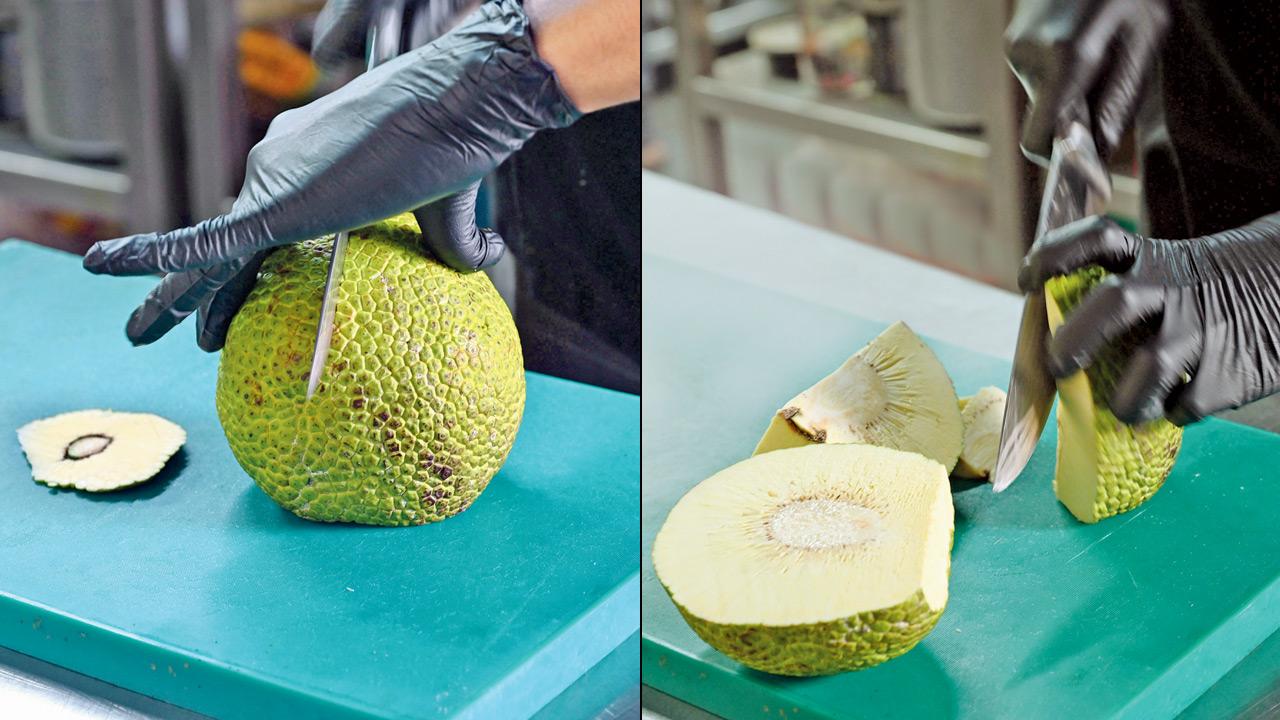
Breadfruit is roughly the size of a small melon, with a round to oval shape, thick, rough, and textured skin, with mottled patterns in shades of green to yellow-green, turning brownish as it ripens. The surface may appear slightly spiky or bumpy, similar to jackfruit but less rugged
Earlier this week, a friend returned from Goa carrying a prized seasonal gift — breadfruit, or Neer Phanas, which she planned to marinate in simple spices and rawa-fry to enjoy with her evening chai by the window. For those who trace their roots to India’s coast, this humble fruit — also known as Jeev Kadgi in Mangalorean Konkani, Jeegujje in Kannada, and Kadachakka in Kerala, Seema Panasa in Telugu — is more than just an ingredient. It’s memory, connection, and comfort, wrapped in a meaty, starchy form.

Vikram Shenoy prepares Jeev Kadgi Bhutti at Shenoy’s. Pics/Atul Kamble
Aparna Bhat, founder of The Traveling Thali shares, “In our home, the arrival of breadfruit season sparks quiet excitement — because it’s not just about food, it’s about continuity. It’s about keeping alive a cultural thread in a city like Mumbai, far from the coastal roots of our ancestors.” For years, her family has maintained a meaningful exchange with another Mangalorean Konkani household: “Each season, we receive a few Jeev Kadgis from them, and we share jackfruit from our garden. It’s simple, unspoken, and deeply personal.”
Read Next Story
Trending Stories
Latest Photos
Latest Videos
Latest Web Stories
ADVERTISEMENT
Mid-Day Fast
ADVERTISEMENT

ADVERTISEMENT