Home / Mumbai-guide / Things To Do / Article /
Book review: Faith is everywhere
Updated On: 19 August, 2024 12:29 PM IST | Mumbai | Nandini Varma
A new children’s book puts forth ideas of faith and diverse beliefs for young readers through the eyes of a nine-year-old who joins his anthropologist father’s travels for a project





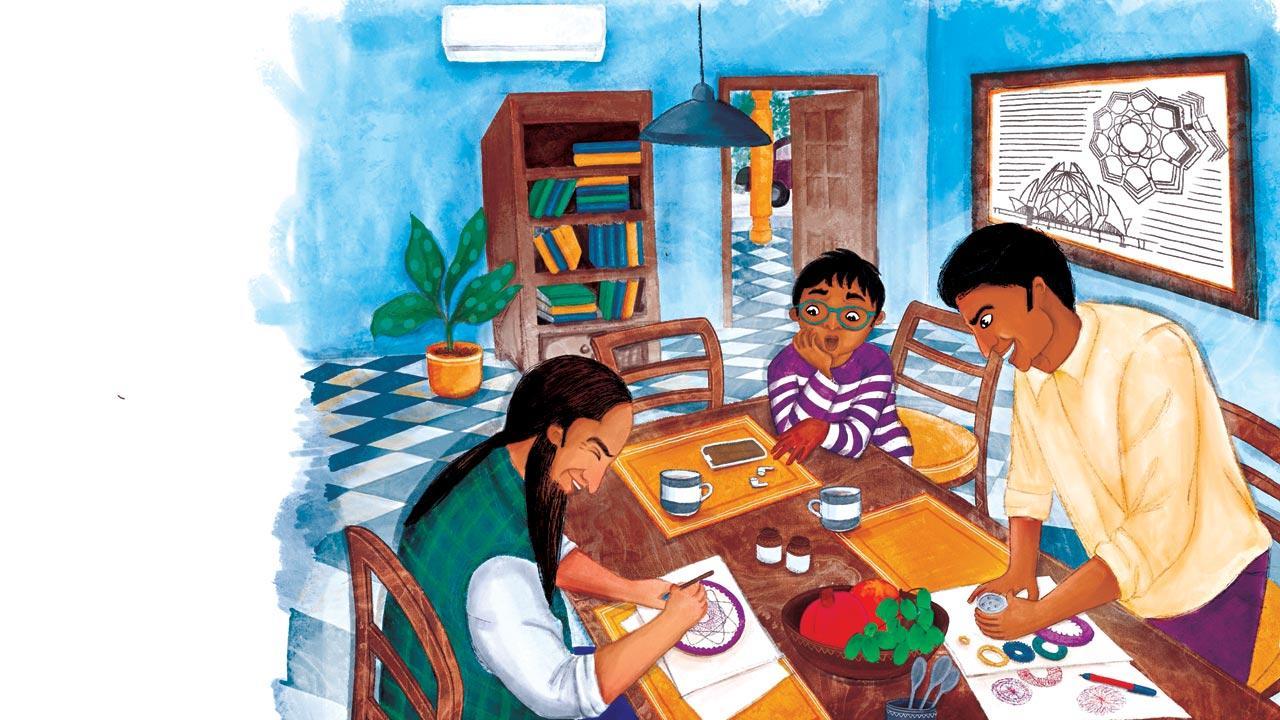
Shunya and his father meet Habib, an architect in Delhi, who follows the Baha’i faith. Illustrations Courtesy/Shruti Hemani, Harpercollins India
Faith is all around us. Human evolution and the evolution of faith have kind of happened simultaneously. There were a lot of things that ancient humans didn’t understand, and they tried to find answers through the stories they told themselves. Over a period of time, those stories became organised faith in a sense,” says author Nalini Ramachandran, whose latest children’s book, The Boy with a Hundred Questions (HarperCollins India), is rooted in the ideas of faith. Shunya, a nine-year-old boy, is on a quest to find answers to questions he’s curious about. This, he believes, is the only way he can stay connected with his thatha (Tamil for grandfather), a pious man who passed away before Shunya could have his curiosity satiated.
Like many ancient stories centred around myth and belief, Ramachandran employs the structure of a frame narrative. The main story, framing the other stories, is about Shunya’s anthropologist father who takes a trip around the world in search of his 11 doppelgangers for a personal project on human behaviour. Shunya accompanies him on his travels. Each meeting with a doppelganger turns into new lessons in faith for Shunya. For example, Koinet in Maasai Mara, Kenya, introduces him to the concept of animism followed by the tribes in the continent and narrates the story of a battle between the Black God (Enkai-Narok) and the Red God (Enkai-Na-Nyokie).
Trending Stories
Latest Photos
Latest Videos
Latest Web Stories
ADVERTISEMENT

Ganeshotsav 2026

ADVERTISEMENT