Home / Mumbai-guide / Things To Do / Article /
Here's why you need to dive into the Dalai Lama's new book
Updated On: 24 May, 2025 09:15 AM IST | Mumbai | Nandini Varma
The 14th Dalai Lama, Tenzin Gyatso, in his book Voice for the Voiceless gives a searingly honest account of Tibet’s long and unresolved struggle for freedom and autonomy from China



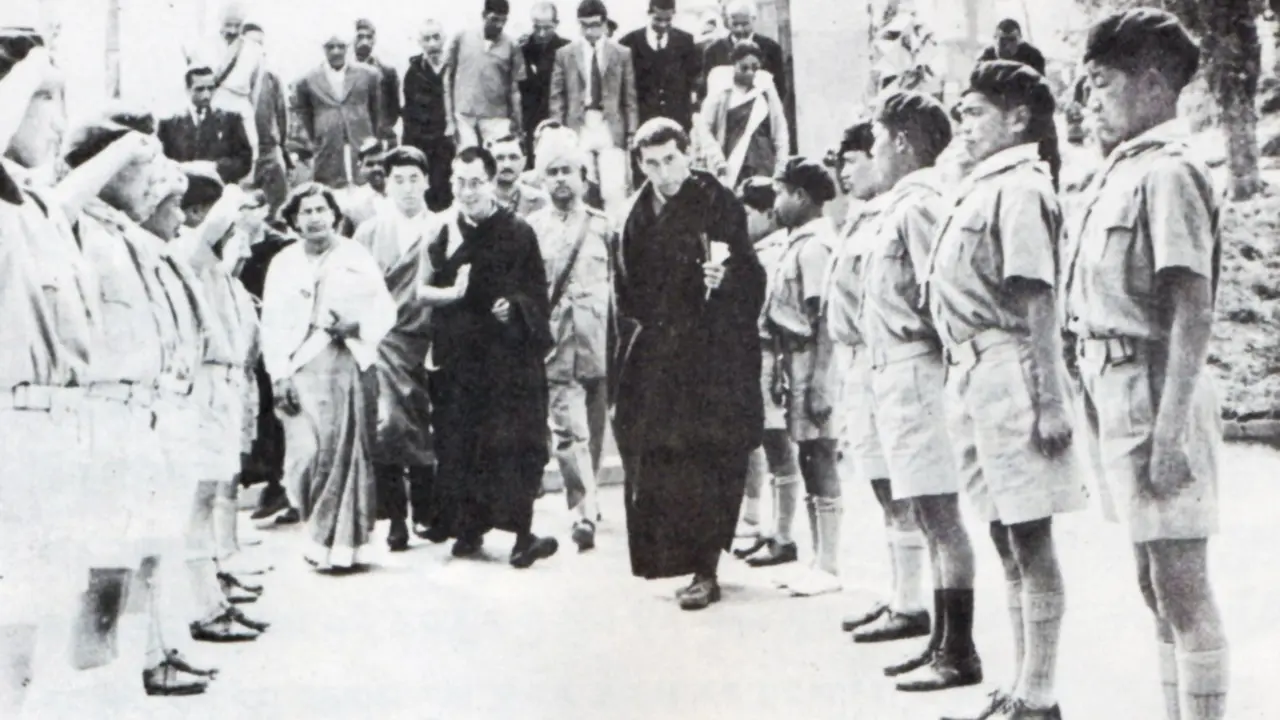
A dated photograph of the 14th Dalai Lama, Tenzin Gyatso (centre) with Samdhong Rinpoche (right). Pics Courtesy/Wikimedia Commons
The world seemed to have abandoned us,” writes the 14th Dalai Lama, Tenzin Gyatso, in his book Voice for the Voiceless (HarperCollins). This is a searingly honest account of Tibet’s long and unresolved struggle for freedom and autonomy from China. The sentence echoes how alone Tibetans have sometimes felt in their fight.
From his negotiations and talks with the Communist Chinese Government at various stages — including as a 19-year-old leader — to the violence inflicted on the Tibetans, the Dalai Lama foregrounds all that led him in 1959 to flee the nation and the tightening of the tension in his homeland today. Since his escape, he has taken shelter in India and has only been able to dream of returning home. We learn how, while in exile, there have been two goals he’s set out to reach. He wishes to continue establishing resettlements for his people to preserve their culture and identity. Additionally, he aims to reach out to governments of other nations so they may help put an end to the Tibetan issue.
Trending Stories
Latest Photos
Latest Videos
Latest Web Stories
ADVERTISEMENT
Mid-Day Fast
ADVERTISEMENT

ADVERTISEMENT