






Home / Mumbai-guide / Things To Do / Article /
Mumbai: Lavani performance male dancers dons rainbow hues
Updated On: 21 January, 2019 07:29 AM IST | Mumbai | Snigdha Hassan
A lavani performance by two male dancers celebrates the Pride month by highlighting the gender-fluid face of the art form

Listen to this article :
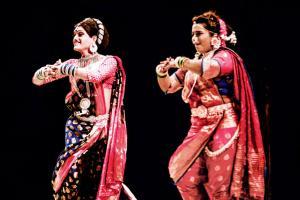
Anand Satam (left) with Akanksha Kadam
The centuries-old history of lavani has traversed through a complex terrain of gender and caste. While the lesser-known tradition of Sangeet Bari characterised by its intimate baithak style has always had women performers, the more popular Tamaasha style only had male performers up until the 1880s, who dressed up as women characters. The reason mirrored the patriarchal notions of the time that looked down upon women in the entertainment profession.
"Things began to change when two women, Pawala Bai and Baya Bai, from the so-called untouchable communities of the time, began to perform lavani. With more women joining in, the number of male performers dwindled away," informs Bhushan Korgaonkar, who wrote the book, Sangeet Bari, in 2014. This Friday, Korgaonkar's Sangeet Bari production directed by filmmaker Savitri Medhatul, will not only combine multiple narratives such as the lavani woman, musicians, the customer and researcher but also celebrate the Pride month with a performance.
Read Next Story
Trending Stories
Latest Photos
Latest Videos
Latest Web Stories
ADVERTISEMENT
Mid-Day Fast
ADVERTISEMENT

ADVERTISEMENT