







Home / Mumbai-guide / Things To Do / Article /
Storytelling festival curates stories rooted in traditional oracle practices
Updated On: 07 January, 2023 09:54 AM IST | Mumbai | Sukanya Datta
From a kiddie treasure hunt to ancient songs and rituals, a festival is bringing together stories for all ages to a screen near you

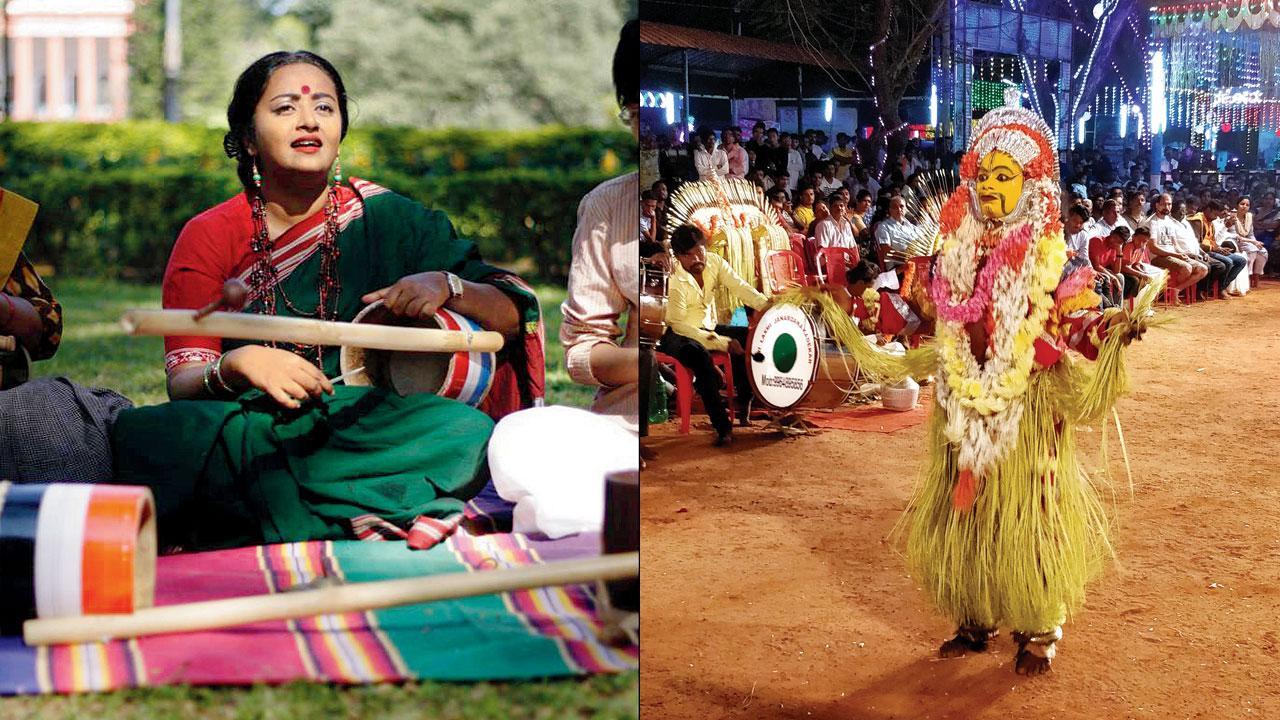
Shilpa Mudbi (right) A Bhoota Kola performer. Pic Courtesy/Wikimedia Commons
Growing up, this writer’s post-school afternoon naps were preceded by a grand storytime, anchored by her mother. Often, the reluctant storyteller would resort to the same tales over and over again. Despite the same plot, it was never the same story. Sometimes, the princess’ name was tweaked; at times, the demon sounded more humane; if we were lucky, there was even a song thrown in. That’s the magic of storytelling — the same stories can take you on new adventures every time. And to celebrate this mutual love for oral traditions, The Bengaluru Storytelling Festival is back with online sessions this weekend.
The festival is an initiative of the Bangalore Storytelling Society, founded by Aparna Athreya, Aparna Jaishankar, Lavanya Prasad, Meera Venkatesan, Ramya Srinidhi, Sowmya Srinivasan, Shylaja Sampath and Vikram Sridhar. The team shared that with this edition, they are delving into the various storytelling traditions rooted in the Indian context. The idea, they added, is to explore the relevance of traditional oracle practices in the contemporary world. In tune with this vision, the festival is offering a medley of performances led by Janani Murali, Shilpa Mudbi, Deepa Kiran, Rohit Bhasi and KP Bhat. Mudbi, a vocalist, researcher and founder, Urban Folk Project, is inviting listeners to join her in humming songs in Bidari — a hybrid language with influences of Kannada, Telugu, Dakhani and Marathi from north Karnataka. Titled The Songs of my Ancestors, the performance will feature pieces that Mudbi learnt from her ajji, while playing the shruti. “These are songs sung by women, to women; they comprise work songs, lullabies, domestic songs, songs of birth and death, and more. The idea is for people to sing along with me so they can visualise the landscape where ajji lived, or the kind of back-breaking work a Dalit woman in the village endures,” shares Mudbi.
Read Next Story
Trending Stories
Latest Photos
Latest Videos
Latest Web Stories
ADVERTISEMENT
Mid-Day Fast
ADVERTISEMENT

ADVERTISEMENT