Home / Mumbai-guide / Things To Do / Article /
Experts dissect the ethics of photo and video manipulation
Updated On: 18 March, 2024 09:04 AM IST | Mumbai | Anindita Paul
In the wake of the recent scandal following a digitally altered photograph released by the British Royal Family, a photographer and an image consultant explore the ethics of photo and video manipulation





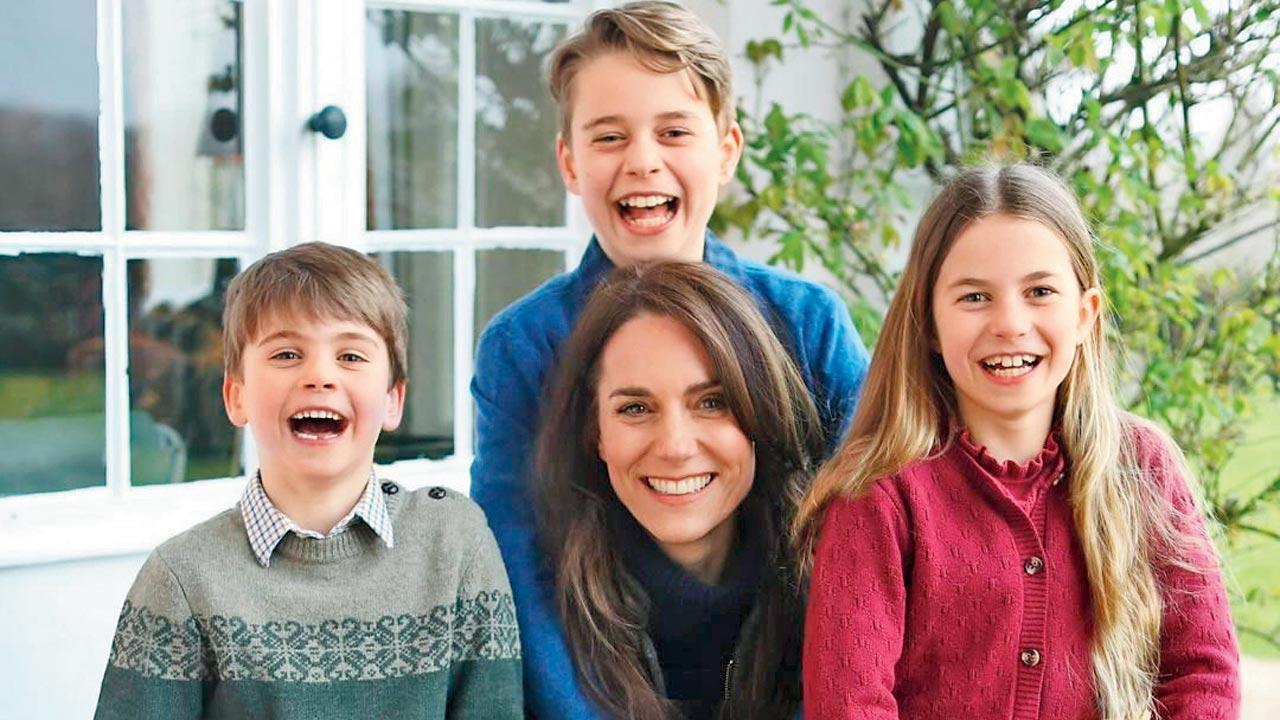
The digitally-altered image of the Duchess of Cambridge, Kate Middleton (centre) with her children was pulled up by social media platforms. Pic Courtesy/Instagram; @princeandprincessofwales
It is, by all accounts, a royal mess. And this time, the uproar surrounding the British monarchs is linked to a seemingly innocuous photograph of the Princess of Wales, Catherine (Kate) Middleton and her children. The photograph was released by Kensington Palace to honour a Mother’s Day tradition and also to quell speculation about The Princess of Wales’ recent surgery. But, the move yielded quite the opposite results. As keen observers pointed out oddities in the photograph, alleging that the image was heavily edited or worse AI generated, Middleton issued an apology admitting to have edited the photograph.
Her admission has sparked, not for the first time, a heated debate about the perils and pitfalls of editing, and when a few tweaks to a photo can compromise its integrity. Living, as we do, in an increasingly digital world where photos and videos can be FaceTuned and filtered by amateur users in a matter of mere minutes, where does one draw the line when it comes to editing?
Trending Stories
Latest Photos
Latest Videos
Latest Web Stories
ADVERTISEMENT
Mid-Day Fast

Ganeshotsav 2026


Watch | Ganeshotsav 2026: Huge crowd gathers at Lalbaugcha Raja on Day 9

Ganeshotsav 2026: 18,818 Ganesh idols immersed in Mumbai on seventh day
ADVERTISEMENT