Home / Mumbai-guide / Things To Do / Article /
Here's how Pandit Shivkumar Sharma's innovations popularised the santoor
Updated On: 21 May, 2022 10:40 AM IST | Mumbai | Shriram Iyengar
The recent passing of santoor icon Pandit Shivkumar Sharma has left a vacuum for followers. A few practitioners decode the santoor’s heritage and future, in sync with the maestro’s legacy and impact





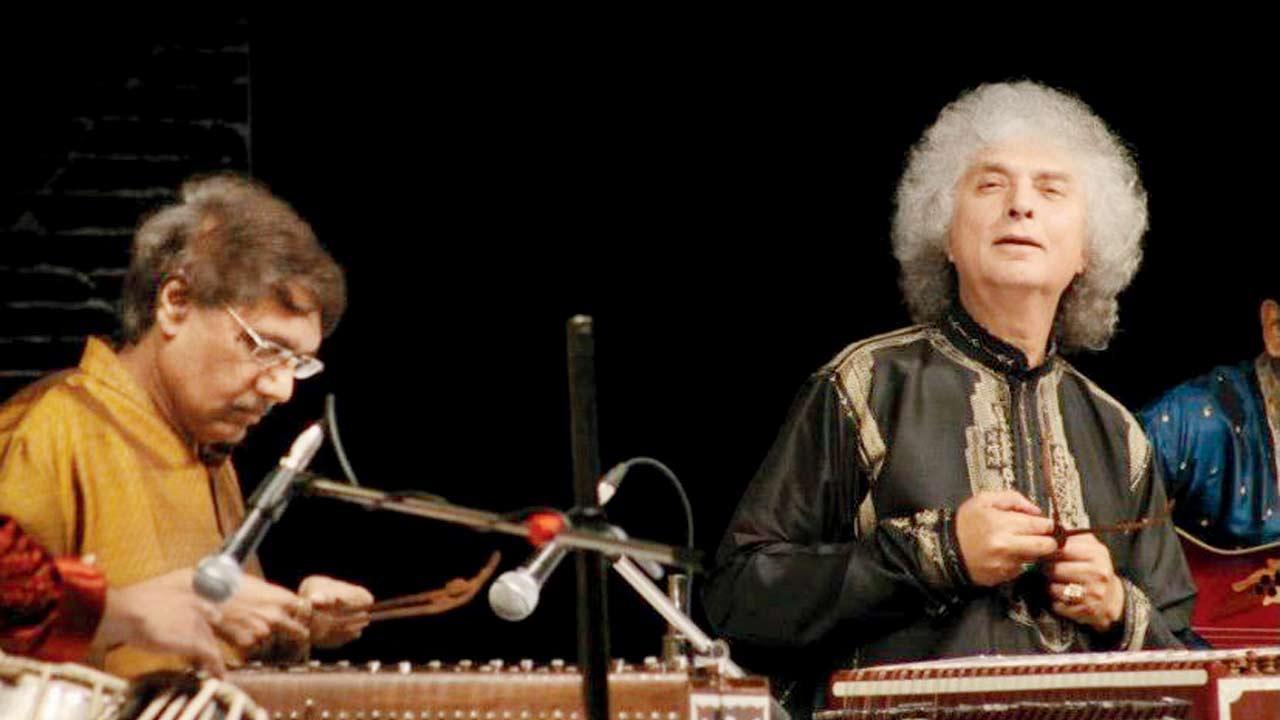
(From left) Dr Dhananjay Daithankar performing with the late Pandit Shivkumar Sharma
There are few names as synonymous with a musical instrument as that of Pandit Shivkumar Sharma and the santoor. In his lifetime, the late musician took an ignored accompaniment to an esteemed stature in Indian classical and world music.
In the ancient world, the santoor was a background accompaniment. Most used in Sufi folk music, the instrument was often hung around the neck to play staccato notes to suit verse poetry. The instrument was innovated on by Pandit Shivkumar Sharma, and popularised to create a sound that suited both — the Indian classical and the global stage. Yet, it remains complex and mysterious for those outside the musical realm. Its form and rhythms, while mesmerising, hide within them a fascinating story.
Trending Stories
Latest Photos
Latest Videos
Latest Web Stories
ADVERTISEMENT
Mid-Day Fast
ADVERTISEMENT