Home / Mumbai-guide / Things To Do / Article /
Succession game: Leadership expert outlines strategies for transitioning leaders
Updated On: 26 March, 2024 09:13 AM IST | Mumbai | Anindita Paul
The recent change in Chennai Super Kings’ leadership reiterated why high-profile transitions come with added baggage. Leadership experts outline how to work around the complexities and move forward





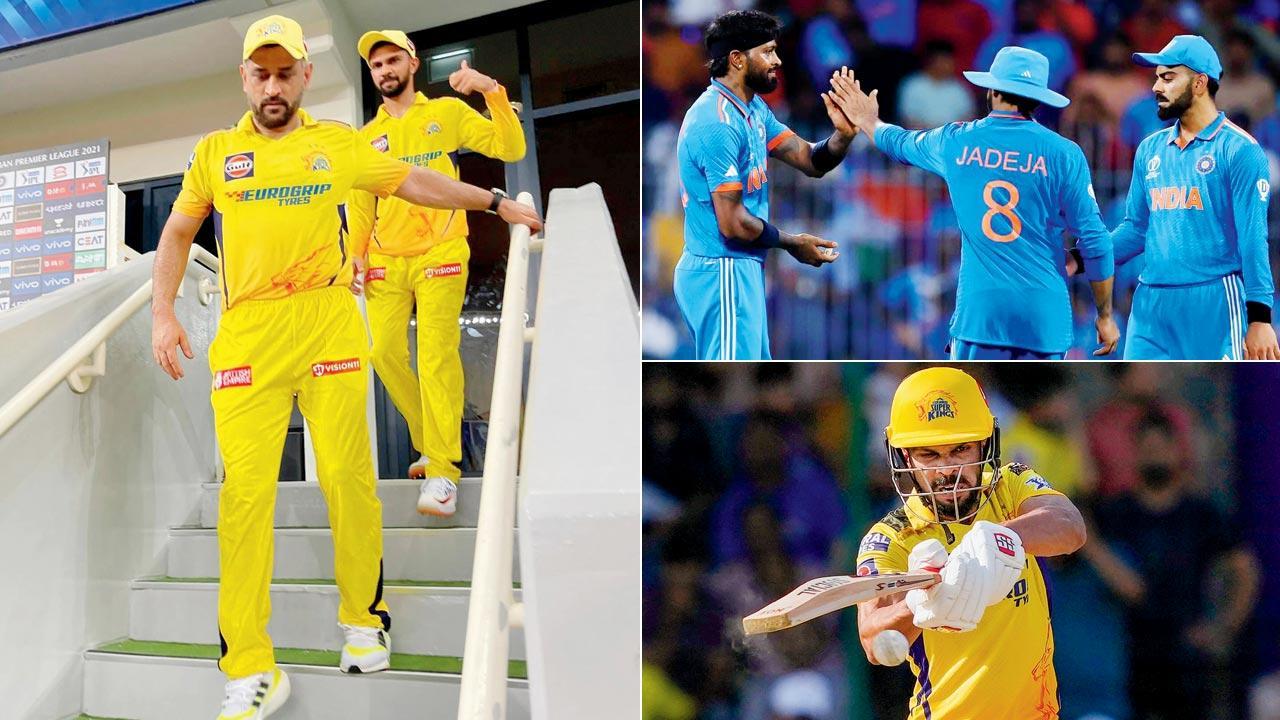
Former CSK skipper MS Dhoni and new captain Ruturaj Gaikwad during a training session. Pics Courtesy/Instagram; (Above, from left) Hardik Pandya recently took over captaincy of Mumbai Indians from Rohit Sharma; Ruturaj Gaikwad plays a shot during a match in the IPL tournament in 2023. Pic Courtesy/PTI
Fans of the Chennai Super Kings (CSK) team were in for a surprise on the eve of the Indian Premier League last week, when fabled captain Mahendra Singh Dhoni stepped down and Ruturaj Gaikwad was named the new skipper of the team. Dhoni, who has led CSK to five impressive trophies, leaving behind large shoes to fill for Gaikwad, a relative newcomer who debuted with CSK only four years ago. Quite naturally, expectations are running high for the new captain to uphold his predecessor’s illustrious legacy and riotous popularity. Drawing parallels with similar scenarios in corporate workplaces, leadership coach Ankoor Naik notes a few reasons why this type of a succession may be a particularly challenging transition for both the team and the newly anointed leader.
 When taking over a team, leaders should avoid blaming their predecessors, and learn from them instead. Representation pics
Trending Stories
Latest Photos
Latest Videos
Latest Web Stories
ADVERTISEMENT

Ganeshotsav 2026

ADVERTISEMENT