






Home / Mumbai-guide / Things To Do / Article /
Tracing the art of translating literary works and future challenges
Updated On: 29 September, 2018 08:35 AM IST | Mumbai | Dalreen Ramos
Ahead of International Translation Day, we explore the art of translating literary works, its present state and future challenges in India

Listen to this article :
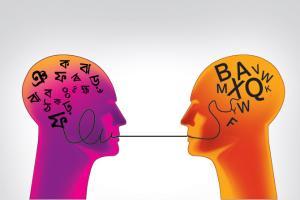
Illustration/Uday Mohite
It is often said that a translator does not translate words. They translate worlds." The adage as quoted by Shanta Gokhale breaks the confines of its commonly viewed definition — to merely render the meaning of text in another language. After penning down two novels, Rita Welingkar (1992) and Tya Varshi (2008) in Marathi, Gokhale translated both to English, a task she followed up with several Marathi titles including Lakshmibai Tilak's memoir, Smirtichitre. And we wonder if the translator then is the invisible writer, or is there a voice? Like Gokhale tells us, "You can't hide your voice from anything that you write. I make the greatest possible effort to get under the skin of the author," adding that the translator need not be a writer, but it helps to be one.
"Translation is not a natural progression from reading and writing. If it were so, everyone who reads and writes would also translate. At its worthiest, it's the result of a decision made by a person who has two languages at her command and is driven by the desire to make the best literature from one language available to readers who do are unable to read in it," she explains. But unlike Gokhale, there aren't many multilingual writers who choose to translate their own works — Jhumpa Lahiri, Milan Kundera and Kiran Nagarkar included. Saat Sakkam Trechalis (1974), Nagarkar's debut novel written in Marathi was translated into English by Subha Slee. Secondary to laziness, the bilingual writer maintains that translation isn't his forte.
Trending Stories
Latest Photos
Latest Videos
Latest Web Stories
ADVERTISEMENT
Mid-Day Fast
ADVERTISEMENT

ADVERTISEMENT