






Home / Mumbai / Mumbai News / Article /
City’s vertical growth is pushing green living out of reach
Updated On: 05 July, 2025 11:22 AM IST | Mumbai | Ritika Gondhalekar
Two major barriers to fully sustainable housing complexes are a lack of awareness among homebuyers and reluctance among developers to invest extra funds. “Constructing a sustainable building can cost 10 to 15 per cent more than a conventional one. If this additional cost is passed on to buyers, especially in an already expensive market like Mumbai"

Listen to this article :
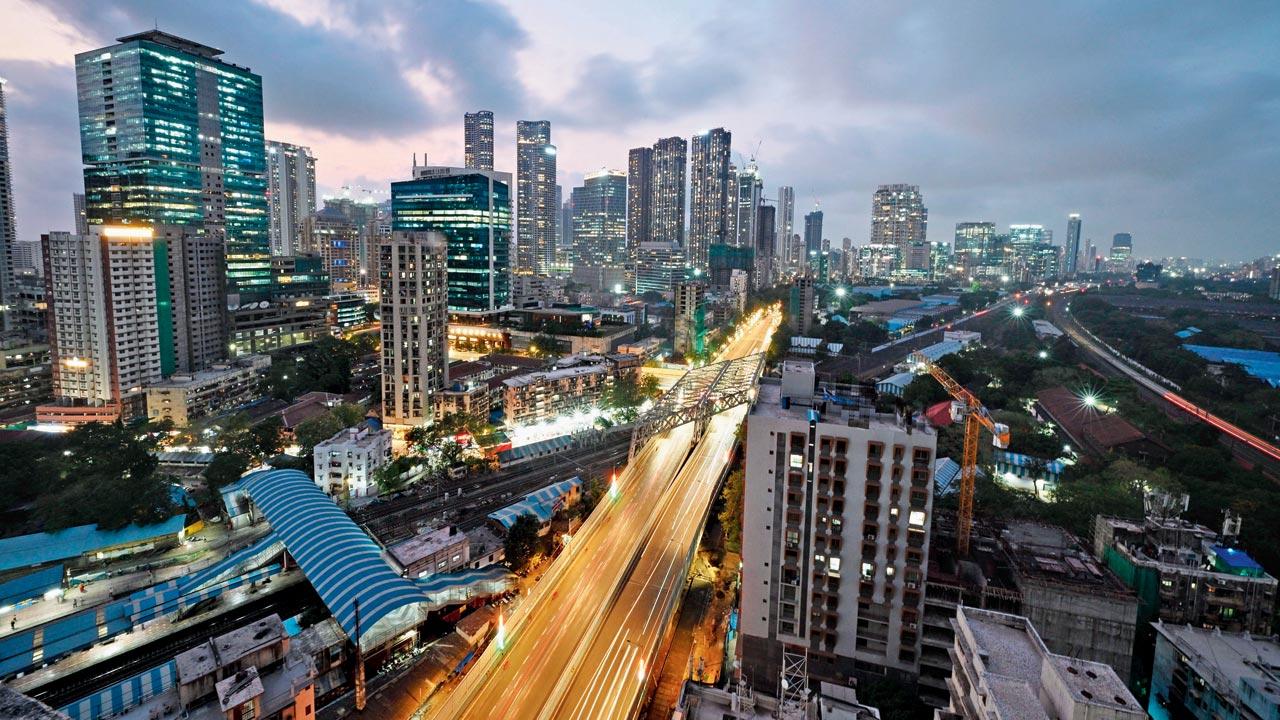
The city’s skyline, as seen from Lower Parel. Pic/Rane Ashish
The recent announcement regarding the regulation of air conditioner temperatures, implementation of which is still 25 years away, has once again highlighted the urgent need for sustainably built structures. At a time when Mumbai is facing a land crunch and older buildings are undergoing redevelopment one after another, mid-day tried to explore whether the city can adopt a sustainable construction model.
Unfortunately, experts from various fields gave a unanimous answer: “Mumbai cannot have a completely sustainable ecosystem.” But why?
“After modelling the energy released from buildings, vehicles, and human beings, the data suggests that outdoor temperature largely governs indoor temperature. In humid cities like Mumbai, ambient temperatures fluctuate significantly throughout the day, which keeps indoor temperatures slightly higher and affects people’s thermal comfort, the temperature-related comfort a person feels, both outdoors and indoors,” explained Y Nithiyanandam, PhD, professor and head, Geospatial Research Programme, Takshashila Institution.
Trending Stories
Latest Photos
Latest Videos
Latest Web Stories
ADVERTISEMENT
Mid-Day Fast
ADVERTISEMENT

ADVERTISEMENT