






Home / Mumbai / Mumbai News / Article /
'Aggressive screening, sealing slums helped,' says BMC
Updated On: 25 June, 2020 07:07 AM IST | Mumbai | Prajakta Kasale
Two months back seven wards mainly in South, South Central Mumbai accounted for 55% of total cases but now they only have a 37% share

Listen to this article :
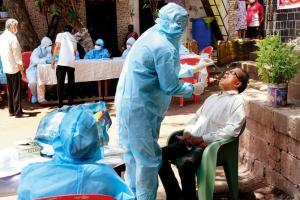
Civic workers conduct swab tests at the Dhareshwar Temple compound in Dharavi. Pic/Suresh Karkera
Once declared the hotspots of the COVID-19 pandemic, seven of 24 wards mainly in the South and South Central parts of Mumbai have started to show a sharp decline in the number of cases. Two months back they accounted for 55 per cent of the total number of cases in the city but now they only have a 37 per cent share and accounts for 30 per cent of the total active cases.
Cases started emerging in K West ward (Jogeshwari West to Vile parle West) in March itself (mainly those with international travel history) and Worli Koliwada in G South ward (Mahalaxmi, Parel) was the first area to be sealed after a cluster of cases were reported from there. While Dharavi (G North ward) did not have that many cases in the first four weeks of the pandemic, the numbers started to increase from May. Slums in Kurla (L ward), Bandra (H East), Wadala (F North) and Byculla (E ward) remained hotspots for at least three months due to a number of cases emerging from these pockets. The BMC adopted a new management policy and started sealing whole slums instead of small Containment Zones in the city from mid-March.
Trending Stories
Latest Photos
Latest Videos
Latest Web Stories
ADVERTISEMENT
Mid-Day Fast
ADVERTISEMENT

ADVERTISEMENT