Home / Mumbai / Mumbai News / Article /
Exclusive: Mumbai’s air pollution may be worse than what data shows
Updated On: 29 January, 2025 07:09 AM IST | Mumbai | Dipti Singh
Analysis of data from all 30 air quality index monitoring stations show significant inconsistencies, raising concerns about credibility of the city’s overall pollution data



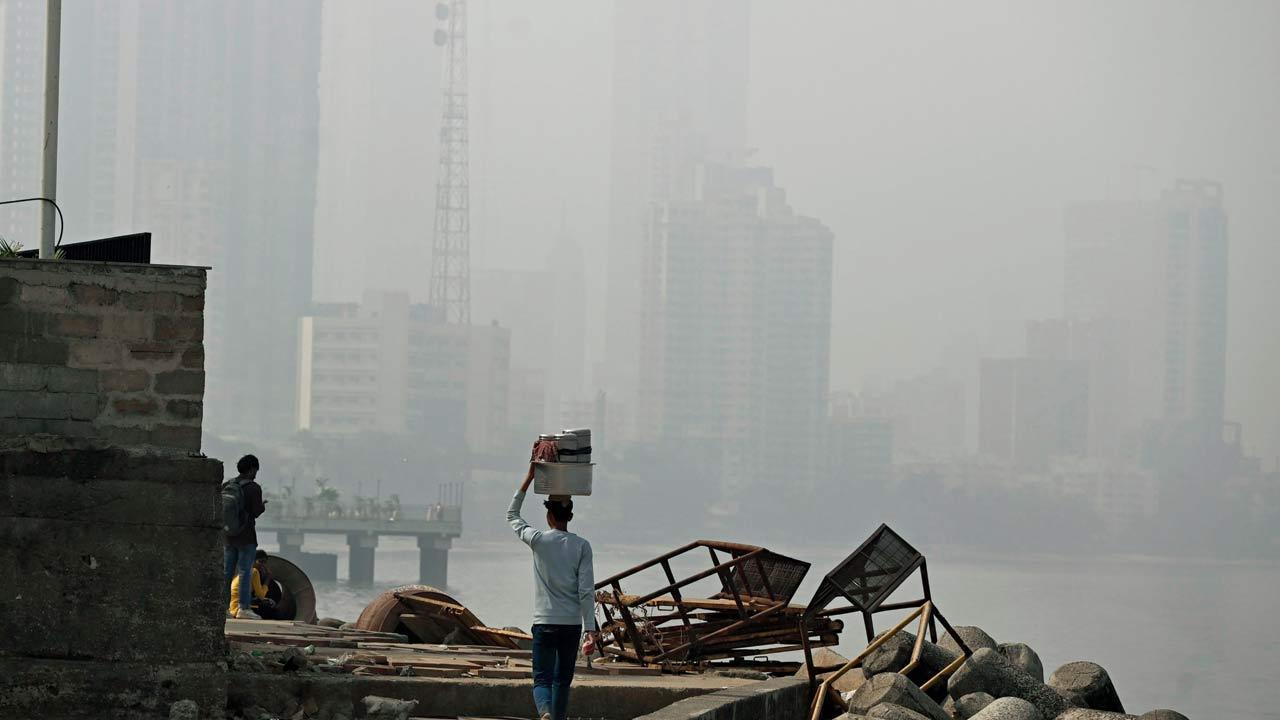
Worli and Prabhadevi shrouded in a thick morning smog on January 28. Pic/Ashish Raje
Are bureaucratic and operational inefficiencies compromising Mumbai’s ability to tackle one of its most pressing environmental challenges? This question resonates among air quality experts, environmentalists, analysts, and citizens. For the past two years, Maharashtra Pollution Control Board (MPCB) and BMC have pushed for recalibration and relocation of SAFAR AQI monitoring stations, while the latter has defended its adherence to international and scientific standards. Compounding this issue, several monitoring stations have reportedly been offline, either entirely or for most of the day for months, disrupting accurate tracking of air quality trends.
A 2024 analysis of data from all 30 AQI monitoring stations revealed significant inconsistencies and gaps in Mumbai’s AQI readings, raising concerns about the credibility of the city’s overall pollution data. As a result, what residents perceive in reality may starkly differ from what the indices report, undermining effective policy and citizen awareness efforts to combat pollution.
Trending Stories
Latest Photos
Latest Videos
Latest Web Stories
ADVERTISEMENT
Mid-Day Fast
ADVERTISEMENT

ADVERTISEMENT