






Home / Mumbai / Mumbai News / Article /
Just one-fifth of Mumbai roads are pedestrian-friendly
Updated On: 16 May, 2022 09:39 AM IST | Mumbai | Dipti Singh
Based on disappointing numbers, action panel urges planning authorities to draft detailed non-motorised transport policy

Listen to this article :
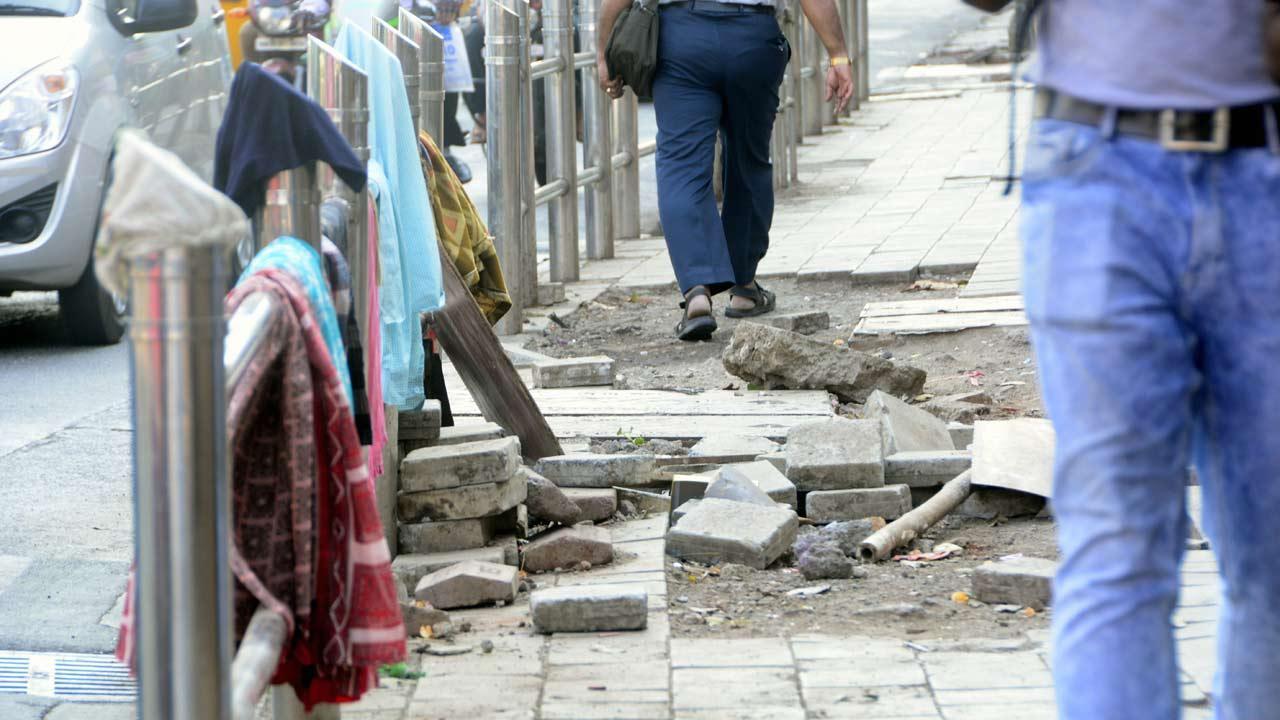
Paver blocks have come off a stretch of a footpath at Worli. File pic
Maharashtra may have framed an urban transport policy over five years ago to develop infrastructure aligned with walking, cycling, and public transportation, as well as to combat traffic congestion, but in Mumbai walking remains a nightmare. The recently launched Mumbai climate action plan’s (MCAP) sustainable mobility outlook has highlighted that only 22 per cent of the city’s roads are pedestrian-friendly.
To increase walkability and eliminate pedestrian-vehicular conflicts on the street, MCAP has recommended that the city planning authorities draft a detailed Non-motorised transport (NMT) policy for Mumbai by 2035. The MCAP has also set a target for BMC, MMRDA and other city planning authorities to implement pilot pedestrianisation projects in high footfall areas by 2025, fixing signs near pedestrian crossings, and increase signal timings for walkers by 2030 to ensure a reduction in fatality rates for pedestrians, and increase in km of pedestrian walkways in low-income areas. At present, most footpaths are encroached, obstructed by structures, or used to park two-wheelers.

Area outside Dadar station. Hawkers occupy most city roads, says MCAP study. File pic
Read Next Story
Trending Stories
Latest Photos
Latest Videos
Latest Web Stories
ADVERTISEMENT
Mid-Day Fast
ADVERTISEMENT

ADVERTISEMENT