






Home / Mumbai / Mumbai News / Article /
From Mira Road to Laos: How love became bait in a cruel cyber con
Updated On: 10 May, 2025 07:18 AM IST | Mumbai | Diwakar Sharma
Mira Road men reveal how they were lured to Chinese cyber-fraud factories that use AI deepfakes, fake love, and fake Facebook IDs to scam Americans. At these digital sweatshops, recruits are handed thick script booklets and told to memorise lines designed to trap mostly young Americans and Europeans

Listen to this article :
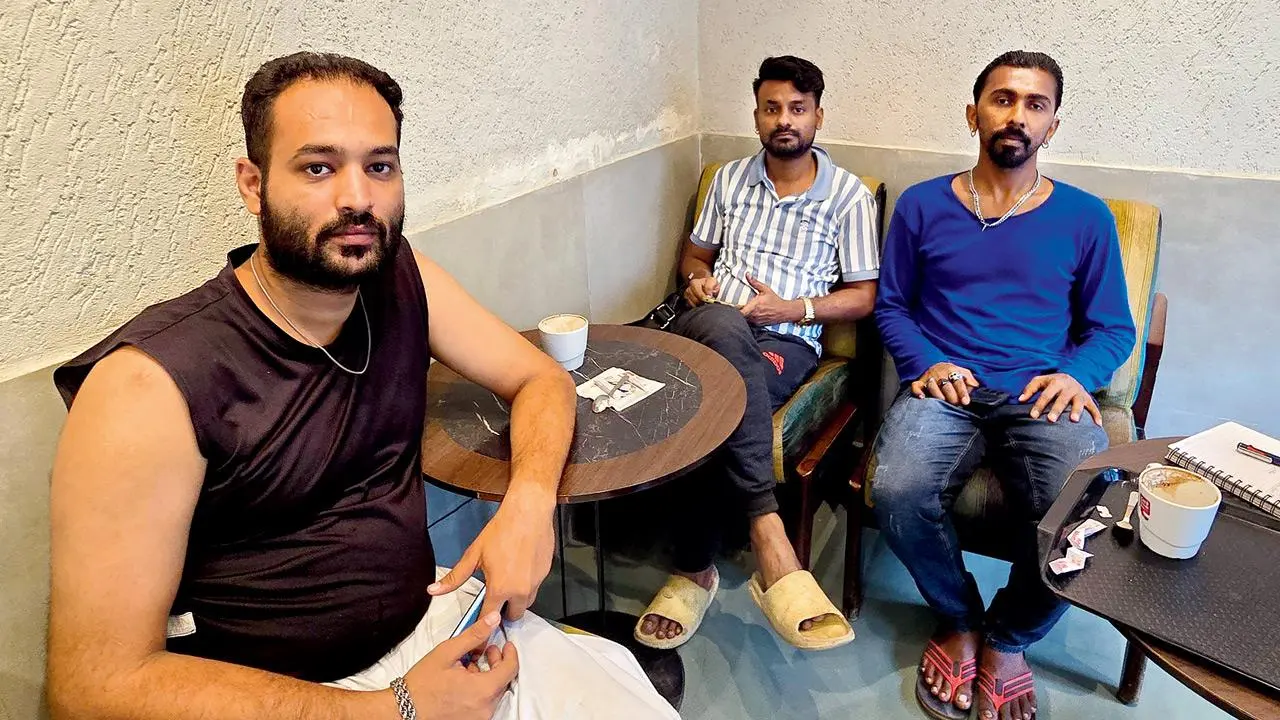
The trio (from left) of Sayed Zakir Abbas, Ismail Sayed and Shaban Salim, who were trafficked to Bangkok. Pic/Diwakar Sharma
Unsuspecting, jobless youths trafficked to Chinese-run cybercrime factories in Laos are being trained to execute “romance-investment” scams—a calculated blend of online seduction and financial fraud. At these digital sweatshops, recruits are handed thick script booklets and told to memorise lines designed to trap mostly young Americans and Europeans. The targets are initially ‘love-bombed’ and then manipulated into wiring large sums of money under the pretence of investing in fake cryptocurrency platforms.
Unpacking the sugarcoated layers of deception, three Mira Road-based men told mid-day how scammers ensnare victims with fabricated affection, aimed at disarming skepticism and building false trust. Once emotionally entangled, victims are coaxed into transferring funds to bogus platforms. The scammers use deepfake videos, spoofed identities, and forged digital personas to create an illusion of legitimacy and intimacy.

Shaban Salim and Sayed Zakir Abbas. Pics/Diwakar Sharma
Trending Stories
Latest Photos
Latest Videos
Latest Web Stories
ADVERTISEMENT
Mid-Day Fast
ADVERTISEMENT

ADVERTISEMENT