






Home / Mumbai / Mumbai News / Article /
Mumbai: AC locals to be upgraded to Vande Metro trains
Updated On: 21 May, 2023 07:56 AM IST | Mumbai | Rajendra B. Aklekar
In a surprise Friday night announcement, Mumbai’s future AC locals got upgraded to Vande Metro trains, which on the best of days promise faster, cooler travel; on the worst, to sail you through the floods. Railways insiders, transport gurus and long-time commuters weigh in on what this means for Mumbai

Listen to this article :
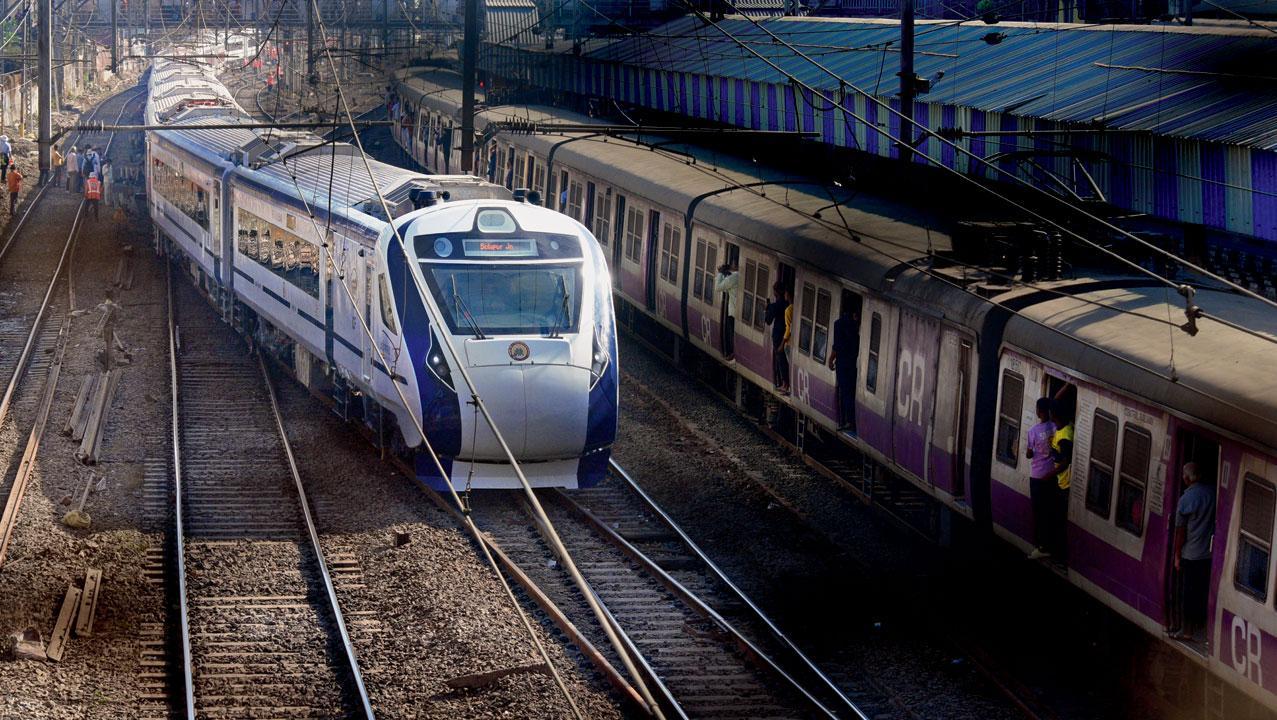
The Vande Metro train will be modelled on the Vande Bharat Express, have 10 pc extra carrying capacity, sealed gangways and coaches earmarked for ladies, physically disabled and seniors. Pic/Satej Shinde
 One hundred and seventy years ago, on a hot and sultry April 16 afternoon, a 14-coach train bedecked with garlands and flowers, and pulled by three steam engines, started its journey at the boom of cannons atop St George’s Fort and to the tune of Bombay Governor’s band, from a small wooden structure called Boree Bunder station. It was an adventurous journey with a hissing and puffing steam engine spewing hot steam, water, soot and smoke on open-windowed passengers along the way. The train, packed with 400 guests, officials and dignitaries, reached the township of Thane (Tannah), about 21 miles away, within 57 minutes flat, marking the advent of the railways in India.
The steam trains ran in and around Bombay’s suburbs for 72 years, after which they were slowly converted into electric trains circa 1925. Running 22 hours a day, it became the most reliable and dependable public transport, the lifeline that connected the moving population with the rest of the city. On December 25, 2017, fully air-conditioned locals were introduced into the network for the first time, changing the dynamics of comfortable public travel in the city.
Trending Stories
Latest Photos
Latest Videos
Latest Web Stories
ADVERTISEMENT
Mid-Day Fast
ADVERTISEMENT

ADVERTISEMENT