






Home / Mumbai / Mumbai News / Article /
Mumbai: BEST’s electric push raises questions over unused CNG infrastructure
Updated On: 04 December, 2025 06:49 AM IST | Mumbai | Rajendra B. Aklekar
Electrification of entire bus fleet means robust, albeit underutilised CNG fuelling infrastructure will only cater to private vehicles

Listen to this article :
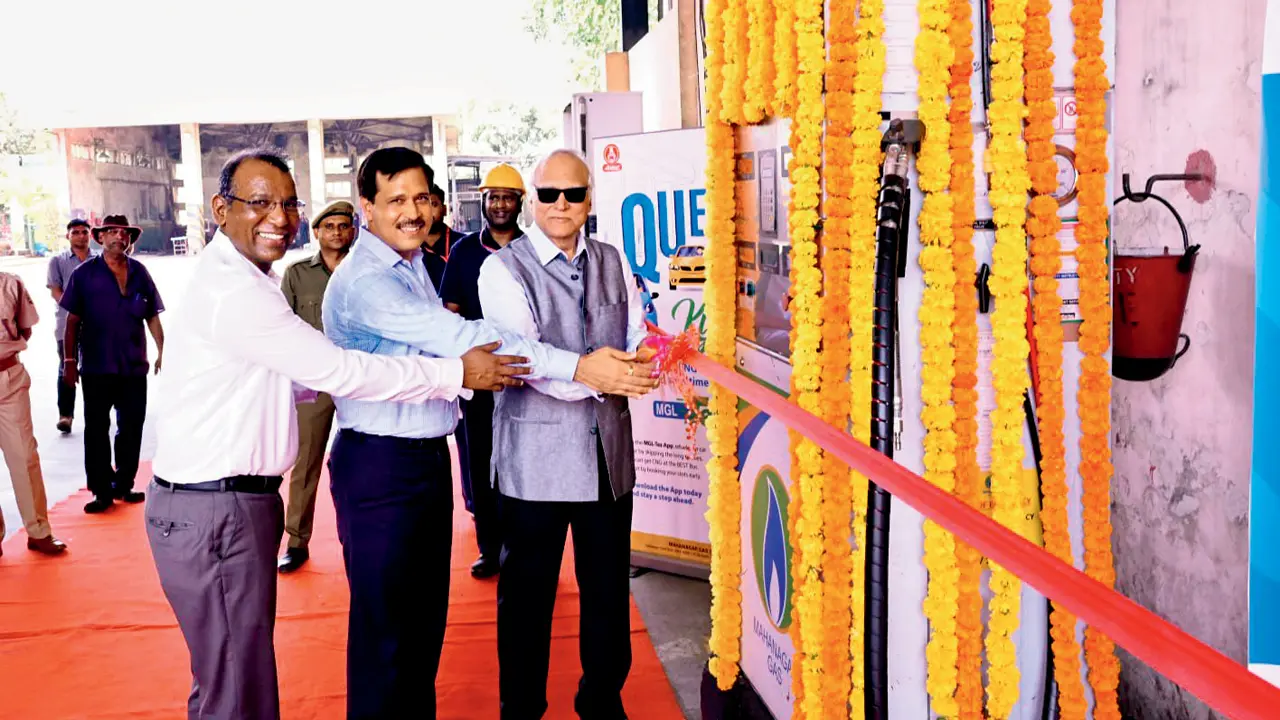
The CNG pump at Ghatkopar bus depot is inaugurated by BEST officials in 2023. Pics/By Special Arrangement
In a city that runs on clockwork precision only when its lifelines are respected, Mumbai’s public transport story seems to have hit a coordination miscalculation. Even as Mahanagar Gas Ltd (MGL) spent years building a dedicated compressed natural gas (CNG) supply ecosystem for Brihanmumbai Electric Supply and Transport (BEST) buses — laying pipelines, setting up high-capacity dispensing stations, and investing heavily to ensure seamless fuelling at 15 of its depots — the undertaking’s decision now to go 100 per cent electric has raised questions about how lack of a transport policy in this city is leading to disconnect and decision making in silos.
BEST has a well-established CNG infrastructure at 15 depots, which can fuel over 4000 buses daily. However, it is currently underutilised, operating at just 17 per cent capacity, primarily due to the adoption of electric buses. By leveraging this underused resource, BEST can quickly adopt a safer, more sustainable fleet.
Read Next Story
Trending Stories
Latest Photos
Latest Videos
Latest Web Stories
ADVERTISEMENT
Mid-Day Fast
ADVERTISEMENT

ADVERTISEMENT