






Home / Mumbai / Mumbai News / Article /
Mumbai: BPP, Central govt help revive one-of-a-kind Parsi museum
Updated On: 29 March, 2025 08:18 AM IST | Mumbai | Fiona Fernandez
Supported by Ministry of Culture, Framji Dadabhoy Alpaiwalla Museum in Khareghat Colony reopened on Thursday. It offers fascinating insight into the community’s rich history, traditions

Listen to this article :
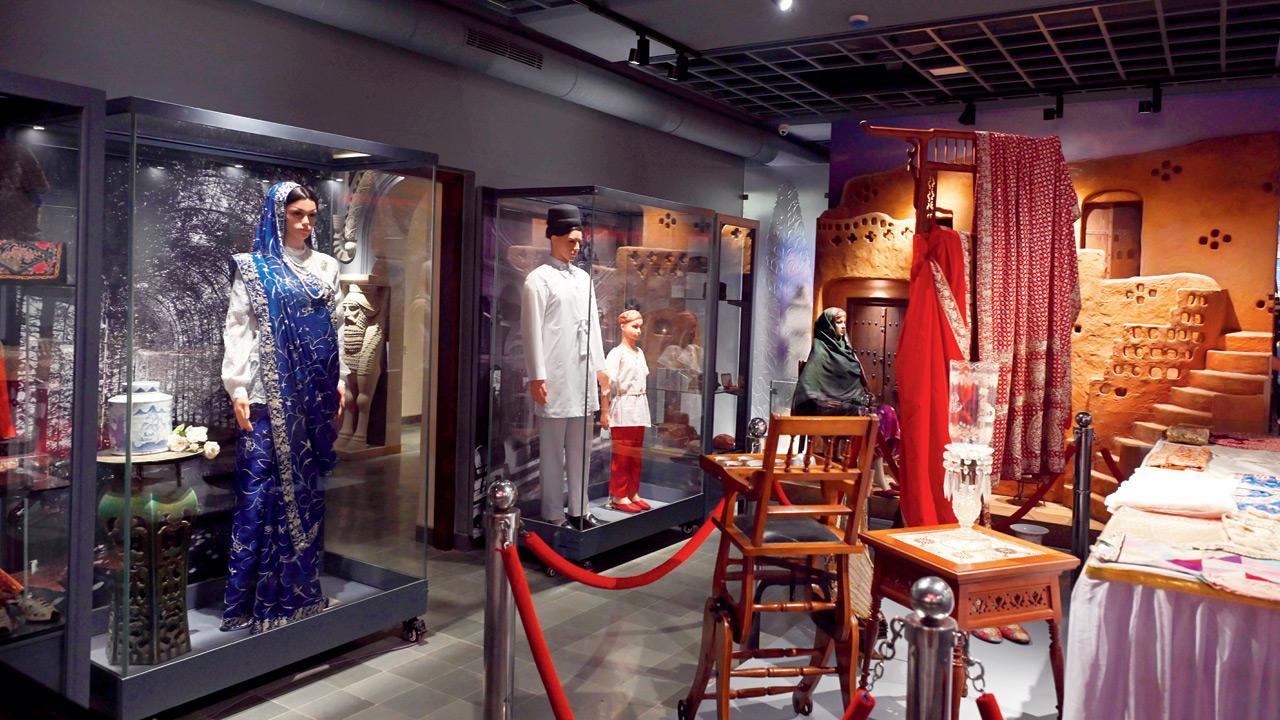
The collection houses exquisite and rare collections of traditional textiles that include influences from China where Parsi merchants engaged in trade. Pics/Ashish Raje
Bombay was built by the larger community,” said Pheroza Godrej, honorary director-advisor, FD Alpaiwalla Museum, while addressing a packed audience gathered at the MP Khareghat Memorial Building to mark the reopening of the FD Alpaiwalla Museum at old Khareghat Colony. Despite it being a muggy March evening, the community and Mumbai’s cultural custodians showed up in heartening numbers to celebrate this milestone. Dr Godrej shared an insightful time-lapse reel as only a historian-researcher could, chronicling the museum’s early days, and importantly, thanking its countless stakeholders while recalling the challenges faced by the team over the decades. “During Covid-19, we took extra precaution since the museum is housed in a residential area. The Ministry of Culture, Government of India held our hand for seven years [referring to their generous financial assistance]. More recently, despite it being Ramzan, workers ensured we met our deadline. We are extremely grateful to so many who made this happen.”

(From left) Firoza Punthakey Mistree, Pheroza Godrej, Cyrus Guzder and Viraf Mehta at the release of the book, Framji Dadabhoy Alpaiwalla Museum
Trending Stories
Latest Photos
Latest Videos
Latest Web Stories
ADVERTISEMENT
Mid-Day Fast
ADVERTISEMENT

ADVERTISEMENT