Home / Mumbai / Mumbai News / Article /
Mumbai: Iconic Buildings Policy faces backlash with 2,200+ objections
Updated On: 25 July, 2025 07:51 AM IST | Mumbai | Eshanpriya MS
The Brihanmumbai Municipal Corporation (BMC) had invited suggestions and objections to its Iconic Buildings Policy on June 24, through a public notice proposing Regulation 33(27) under the Development Control and Promotion Regulations (DCPR) 2034



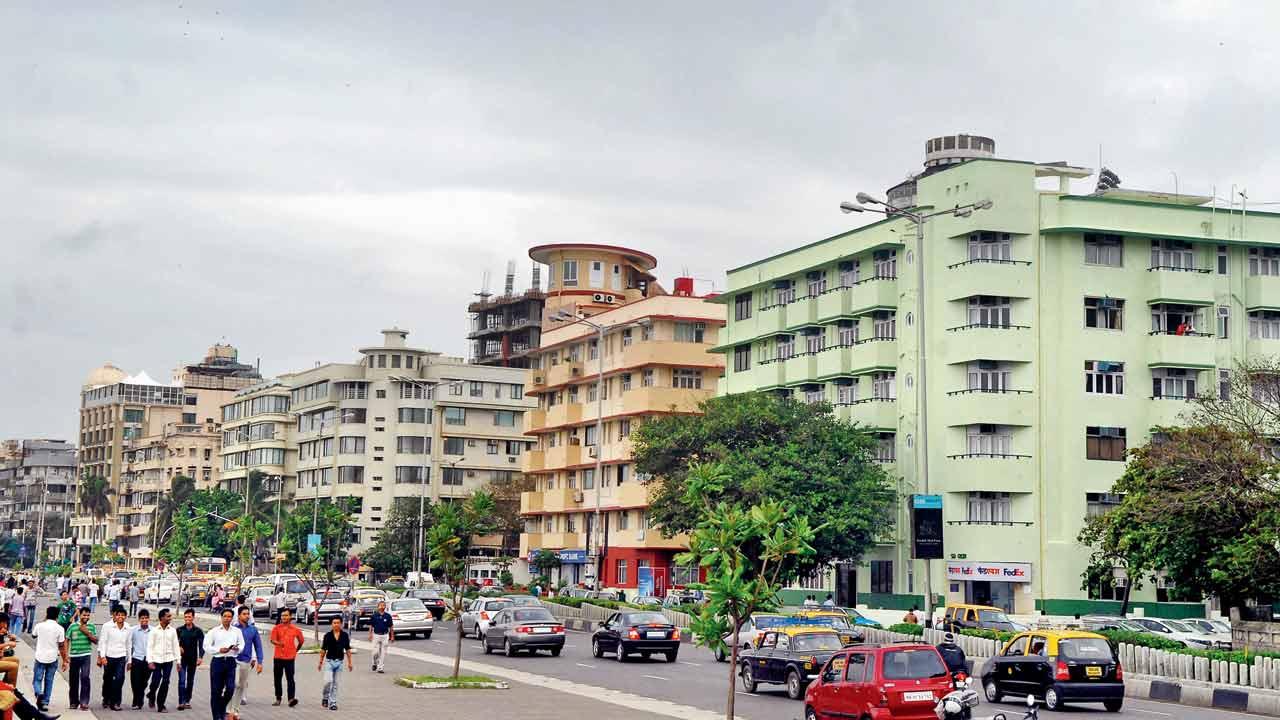
Art Deco buildings at Marine Drive in South Mumbai. FILE PIC/SHADAB KHAN
Now turning into a political flashpoint, the Iconic Buildings Policy announced by Deputy Chief Minister Eknath Shinde in March this year has drawn strong opposition from the Nationalist Congress Party-Sharadchandra Pawar (NCP-SP) faction, which has filed formal objections backed by 2200 signatures in a single letter.
The Brihanmumbai Municipal Corporation (BMC) had invited suggestions and objections to its Iconic Buildings Policy on June 24, through a public notice proposing Regulation 33(27) under the Development Control and Promotion Regulations (DCPR) 2034. Citizens were given a month to submit responses, with the deadline ending on July 24. The objections, coordinated by NCP-SP National Spokesperson Anish Gawande and a coalition of concerned citizens, include signatures from 2205 architects, urban planners, citizens, actors, filmmakers, and civil society activists.
In March, Shinde announced that a new policy would be introduced to encourage the construction of ‘Iconic Buildings’ in Mumbai. The stated aim was to foster world-class architecture while retaining the city’s unique identity, particularly structures built during the British era. The plan would involve amending the Maharashtra Regional Town Planning (MRTP) Act and adding a new chapter to the DCPR 2034. The policy defines an ‘Iconic Building’ as any structure or space having a unique or distinctive characteristic, whether in shape, size, concept, theme, or design.
Trending Stories
Latest Photos
Latest Videos
Latest Web Stories
ADVERTISEMENT
Mid-Day Fast
ADVERTISEMENT

ADVERTISEMENT