






Home / Mumbai / Mumbai News / Article /
Mumbai: Kurla's RAT ninjas ensure no passenger escapes COVID-19 test
Updated On: 04 April, 2021 07:31 AM IST | Mumbai | Gaurav Sarkar
mid-day shadows a team of 36, entrusted with convincing thousands of outstation train passengers pouring into the city to take the Rapid Antigen Test. Arguments, accosting runners and coaxing the stubborn is all in a day’s work

Listen to this article :
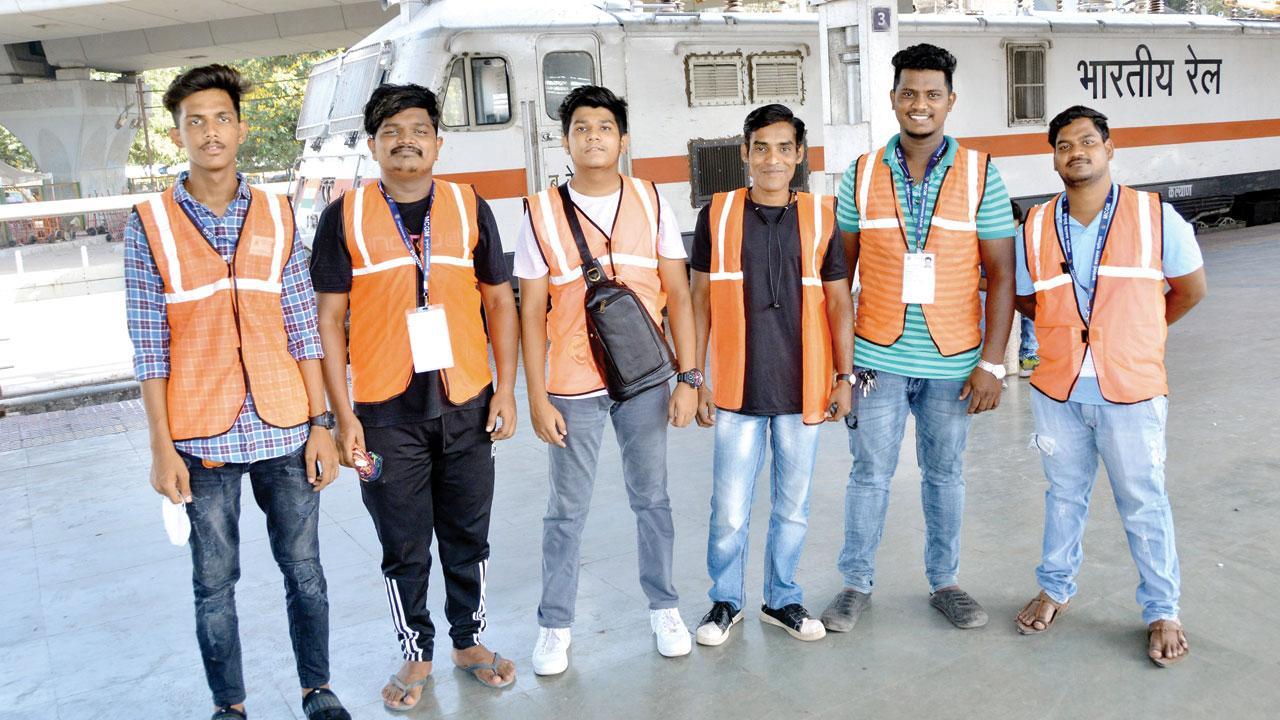
This smiling crew forms a part of the team responsible for monitoring crowds and trying hard to make sure no one escapes without a test. Pics/Sayeed Sameer Abedi
It is 3 pm on a Wednesday afternoon at Kurla Terminus. The shrill air whistle announces the arrival of a long distance train. Suddenly, there is movement on the platform. A motley group of people, largely young men in their 20s, settle around a wooden table set up, arranging sheafs of papers. Two men in blue, with ID cards that read GeneHealth dangling around their necks, scurry to the foot of the crossover bridge that will allow alighting passengers to cross and exit the station. In a few seconds, they stand side by side, their arms out, blocking entry to the bridge. They are helped by a few members of the Railway Protection Force (RPF) and the Mumbai police, who stand in the way of other sundry exists. To the casual observer, this seems like an organised drill. But it’s all in a day’s work for the group of 36 at Kurla, behind the BMC’s Rapid Antigen Testing campaign ongoing at Mumbai’s various railway stations. This crack team’s responsibility is to test each and every passenger alighting from a train who doesn’t provide a negative RT-PCR test report as recent as three days ago, and is arriving into the city from high-risk COVID infection zones. On an average, Kurla Terminus sees the arrival of around 16 outstation trains.

The crowds line up for their tests
Read Next Story
Trending Stories
Latest Photos
Latest Videos
Latest Web Stories
ADVERTISEMENT
Mid-Day Fast
ADVERTISEMENT

ADVERTISEMENT