






Home / Mumbai / Mumbai News / Article /
Mumbai: Marathwada villagers face city struggles at Jarange protest
Updated On: 30 August, 2025 09:11 AM IST | Mumbai | Vinod Kumar Menon
Wide tar roads, towering high-rises, and organised traffic stood in stark contrast to their own mud paths and dimly lit hamlets. Yet, beyond the awe and curiosity, their purpose was clear: to rally behind activist Jarange Patil in what they call a “do or die” fight for the reservation

Listen to this article :
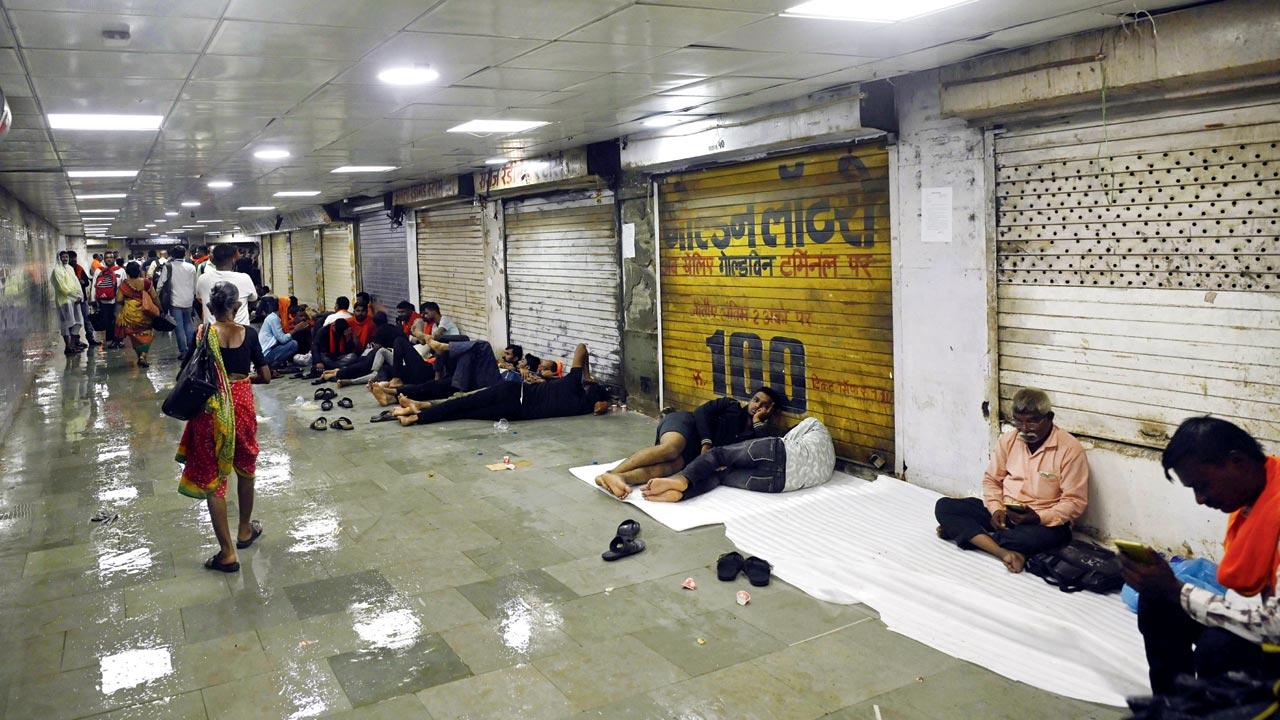
Protesters occupy the subway near CSMT during the Maratha reservation agitation. Pics/Ashish Raje
They came to Mumbai not as tourists but as torchbearers of a cause. For thousands of Maratha farmers and villagers from Marathwada, this was their first step into India’s financial capital — a city they had only heard of in passing but never imagined visiting. Wide tar roads, towering high-rises, and organised traffic stood in stark contrast to their own mud paths and dimly lit hamlets. Yet, beyond the awe and curiosity, their purpose was clear: to rally behind activist Jarange Patil in what they call a “do or die” fight for the reservation. Carrying the weight of debts, broken promises, and the future of their children, they arrived with one voice — “Ek Maratha, Lakh Maratha” — determined not to leave until justice was secured.
“I never dreamt of visiting Mumbai in my entire life. But if it weren’t for Jarange Patil and the Maratha Morcha, our villagers would never have come here,” said Venkat Hamburde, 36, a soybean farmer burdened with a loan of over Rs 2 lakh — a weight he carries daily, as farming is his family’s only livelihood.
 Protesters gather inside CSMT station as part of the Maratha quota stir. Pic/Ashish Raje
Trending Stories
Latest Photos
Latest Videos
Latest Web Stories
ADVERTISEMENT
Mid-Day Fast
ADVERTISEMENT

ADVERTISEMENT