






Home / Mumbai / Mumbai News / Article /
Mumbai: Monitor lizard eggs found in Mulund; incubated and released safely
Updated On: 29 May, 2025 08:49 AM IST | Mumbai | Ranjeet Jadhav
Forest officials and RAWW successfully hatched and released the reptiles after a 114 day incubation period. After 114 days of careful monitoring, five Indian monitor lizards successfully hatched and were released back into their natural habitat. he incubation process was overseen by zoologist Chinmay Joshi

Listen to this article :
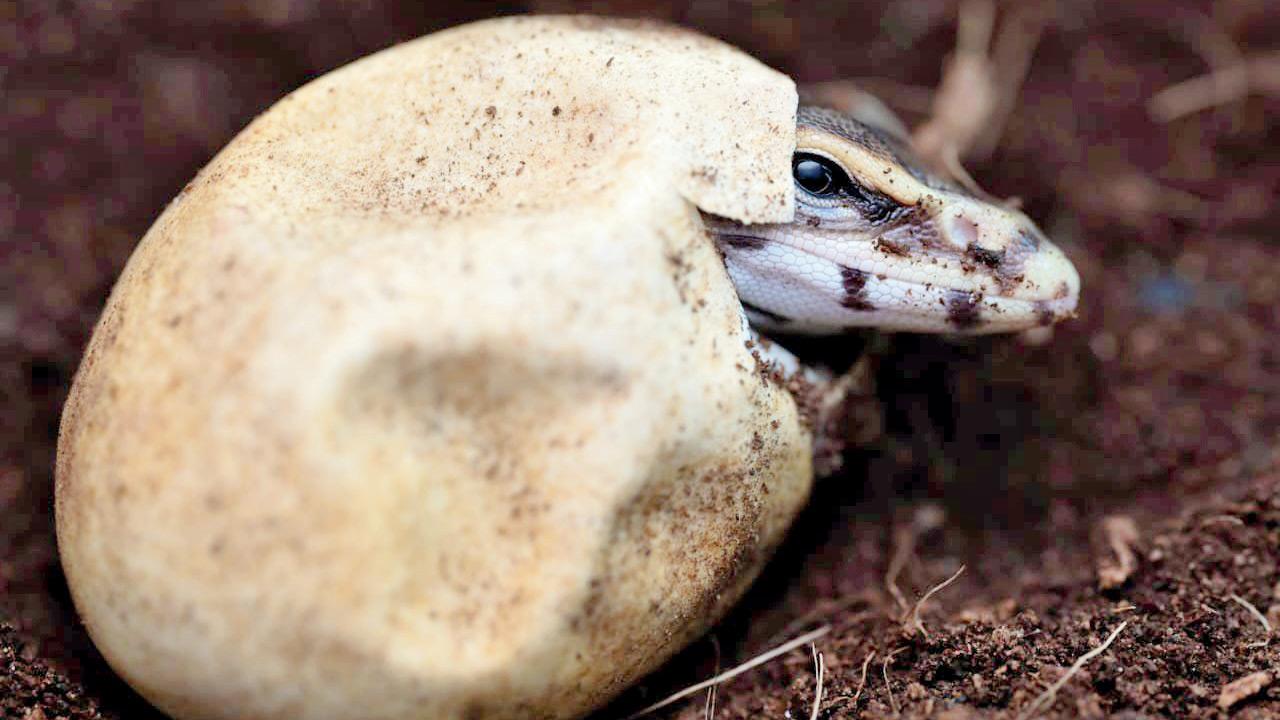
A monitor lizard hatchling breaks free from the egg. Pics/By Special Arrangement
The collaborative efforts of the Maharashtra Forest Department and Mumbai-based NGO RAWW have brought new hope for the conservation of Indian monitor lizards. A few months ago, during a drainage line clean-up near a forest patch in Mulund, civic workers discovered 10 eggs. The forest department handed these over to RAWW for incubation under controlled conditions.

The hatchlings in the controlled environment
After 114 days of careful monitoring, five Indian monitor lizards successfully hatched and were released back into their natural habitat. The remaining five eggs were found to be infertile and were disposed of as per protocol. Pawan Sharma, honorary wildlife warden of Thane and president of RAWW, told mid-day, “Since we live in urban landscapes that often overlap with wildlife habitats, such incidents occur occasionally.”
Trending Stories
Latest Photos
Latest Videos
Latest Web Stories
ADVERTISEMENT
Mid-Day Fast
ADVERTISEMENT

ADVERTISEMENT