






Home / Mumbai / Mumbai News / Article /
Mumbai rains | Malad to Matunga: City’s wettest war zones in 8 years
Updated On: 28 July, 2025 07:58 AM IST | Mumbai | Eshanpriya MS
Data reveals chronic flooding in Mithi catchment areas between 2016 and 2023; Andheri, Kurla among worst-hit; Dadar, Chembur, Borivli, and Kandivli form the second most affected cluster, with each recording between 300 to 400 instances of waterlogging in the same period

Listen to this article :
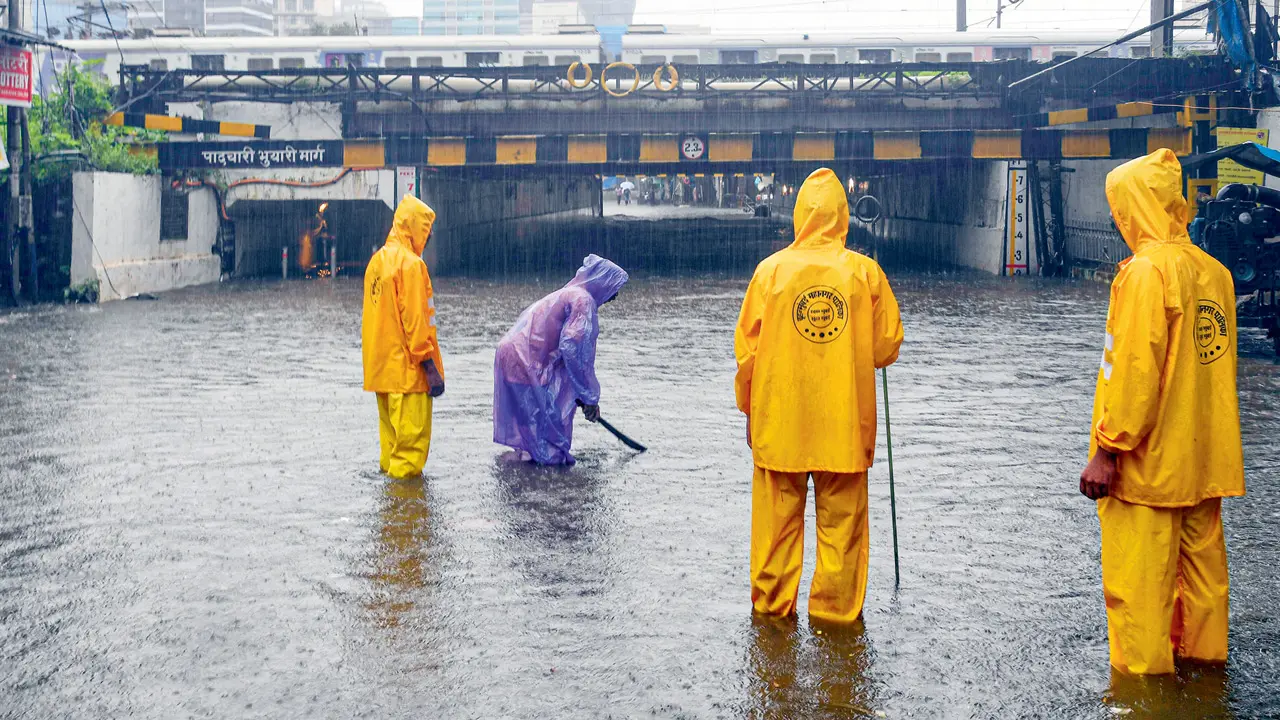
BMC workers check the water level on a flooded road during rain, at Andheri subway, in Mumbai on Friday. Pic/PTI
Areas corresponding to Malad, Andheri, Kurla, Bandra East, Ghatkopar, and Matunga, spread across seven administrative wards, have recorded the highest number of waterlogging incidents between 2016 and 2023, according to data from the Brihanmumbai Municipal Corporation (BMC). Over this eight-year span, these areas reported between 400 to 800 waterlogging incidents. These locations also fall within the catchment of the Mithi river and its associated nullahs, such as Kurla, Kalina, Kajupada, Jogeshwari, and the Dharavi slums.
Dadar, Chembur, Borivli, and Kandivli form the second most affected cluster, with each recording between 300 to 400 instances of waterlogging in the same period. According to civic data, low-lying areas in the Island City flood five to six times annually, typically for a few hours, when heavy rainfall coincides with high tide. Critically, over 35 per cent of Mumbai’s population lives within 250 metres of a chronic flooding spot.
According to the BMC’s Flood Preparedness Guidelines 2025, Mumbai has 127 chronic waterlogging spots. The K West ward, which includes Andheri West, tops the list with 14 spots, followed by Matunga, Kurla, Ghatkopar, and Goregaon with 11 each. In contrast, the Island City area between Colaba and Dadar has just 11 such locations.
Trending Stories
Latest Photos
Latest Videos
Latest Web Stories
ADVERTISEMENT
Mid-Day Fast
ADVERTISEMENT

ADVERTISEMENT