






Home / Mumbai / Mumbai News / Article /
Mumbai: ‘Walkability a constant fight for space and safety’
Updated On: 17 November, 2024 07:53 AM IST | Mumbai | Dipti Singh
The Walking Project takes citizens through high footfall paths to survey hurdles that they can pull up city planners for

Listen to this article :
Acceptable limit of PM2.5 in India is 40 micrograms per cubic meter (µg/m3) as per the Pollution Control Board.
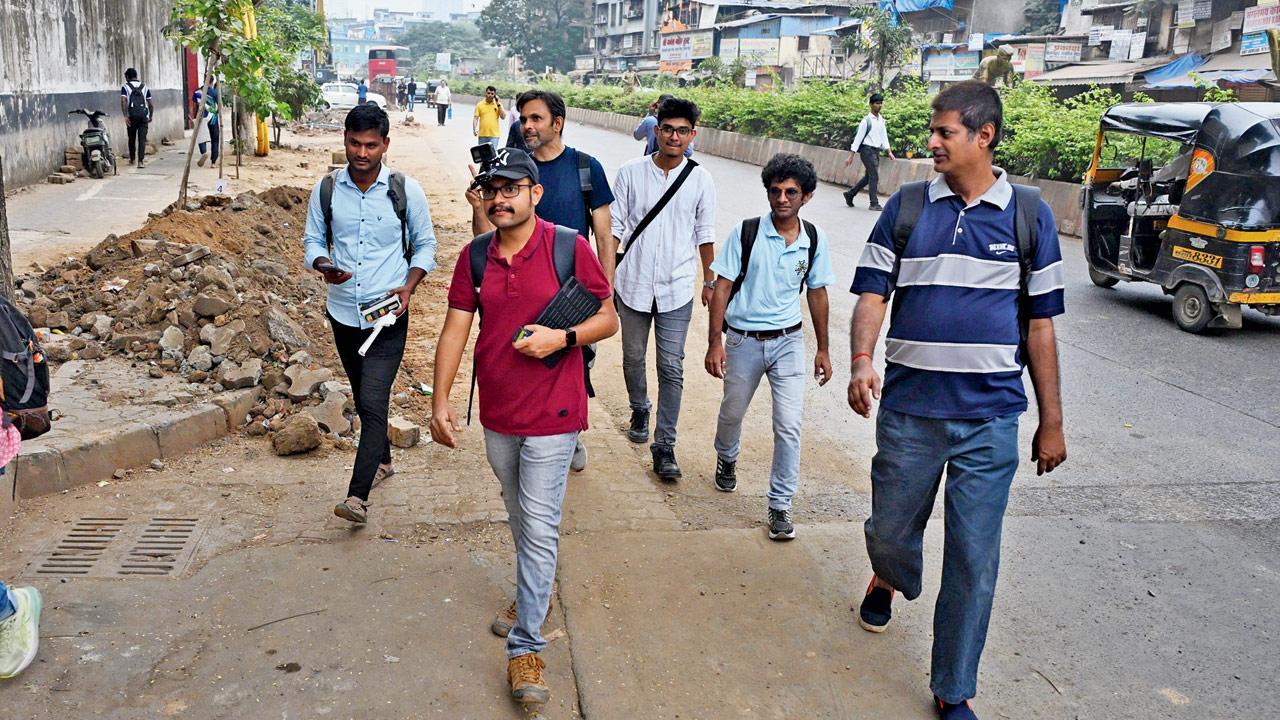
A recent two-KM community walk in Bandra East served a raw wake-up call about urban walkability to Dhanraj Khair. The 22-year-old architecture student is in final year at LS Raheja College. The walk was organised by The Walking Project, a citizen advocacy group established in 2012 for safer, more enjoyable pedestrian experiences across cities. The walks give citizens firsthand exposure to the challenges in urban infrastructure, aiming to align public awareness with the Indian Roads Congress (IRC) standards, which detail ideal footpath width, railings, and other pedestrian-friendly elements.
Khair was one of only seven citizens who braved the challenging route from Bandra Station’s east exit to BKC Metro Station via Kalanagar. They assessed pedestrian infrastructure, walkability, and air quality along the route. Khair describes the walk as, “overwhelming, nauseating, and chaotic. Before you even descend the staircase to exit the station, you’re swarmed by shared auto-rickshaw drivers. The roads to Bandra Court are dug up, forcing crowds onto the roads.”
Trending Stories
Latest Photos
Latest Videos
Latest Web Stories
ADVERTISEMENT
Mid-Day Fast
ADVERTISEMENT

ADVERTISEMENT