Home / Mumbai / Mumbai News / Photos /
In photos: Tunnelling begins for 9.23-km Orange Gate-Marine Drive underground road
Updated On: 03 December, 2025 12:26 PM IST | ronak mastakar
Maharashtra Chief Minister Devendra Fadnavis on Wednesday launched the Tunnel Boring Machine (TBM) for the state’s ambitious 9.23-km underground road corridor that will connect Orange Gate on the Eastern Freeway to Marine Drive. The launch marks a major milestone in one of Mumbai’s most significant infrastructure projects aimed at strengthening east–west connectivity. (Pics/Shadab Khan)




1/7

2/7
Fadnavis was joined at the ceremony by Deputy Chief Minister Eknath Shinde, Maharashtra Assembly Speaker Rahul Narwekar, and several senior officials and dignitaries. With the activation of the TBM, full-fledged tunnelling work on the corridor has officially commenced.
ADVERTISEMENT

3/7
Estimated at Rs 8,056 crore and scheduled for completion in 54 months, the project includes the design and construction of a nearly 10-km roadway, of which approximately 7 km will be entirely underground. Once operational, the corridor is expected to substantially reduce travel time between the city’s eastern and southern regions by 15 to 20 minutes.

4/7
Officials also highlighted the project’s potential to cut fuel consumption and ease both air and noise pollution across key traffic-heavy zones.
ADVERTISEMENT

5/7
According to engineers, the tunnel is the first of its kind in India because of its depth and alignment through densely populated urban areas.

6/7
It will run beneath major transport corridors, including the Central and Western Railway lines, as well as the Mumbai Metro Line 3 (Aqua Line). At its deepest point, the tunnel will reach nearly 50 metres below the surface, with an average depth ranging from 12 to 52 metres.
ADVERTISEMENT

7/7
The project features twin tunnels, each equipped with two 3.2-metre traffic lanes and an additional 2.5-metre emergency lane.
ADVERTISEMENT
Photo of Day
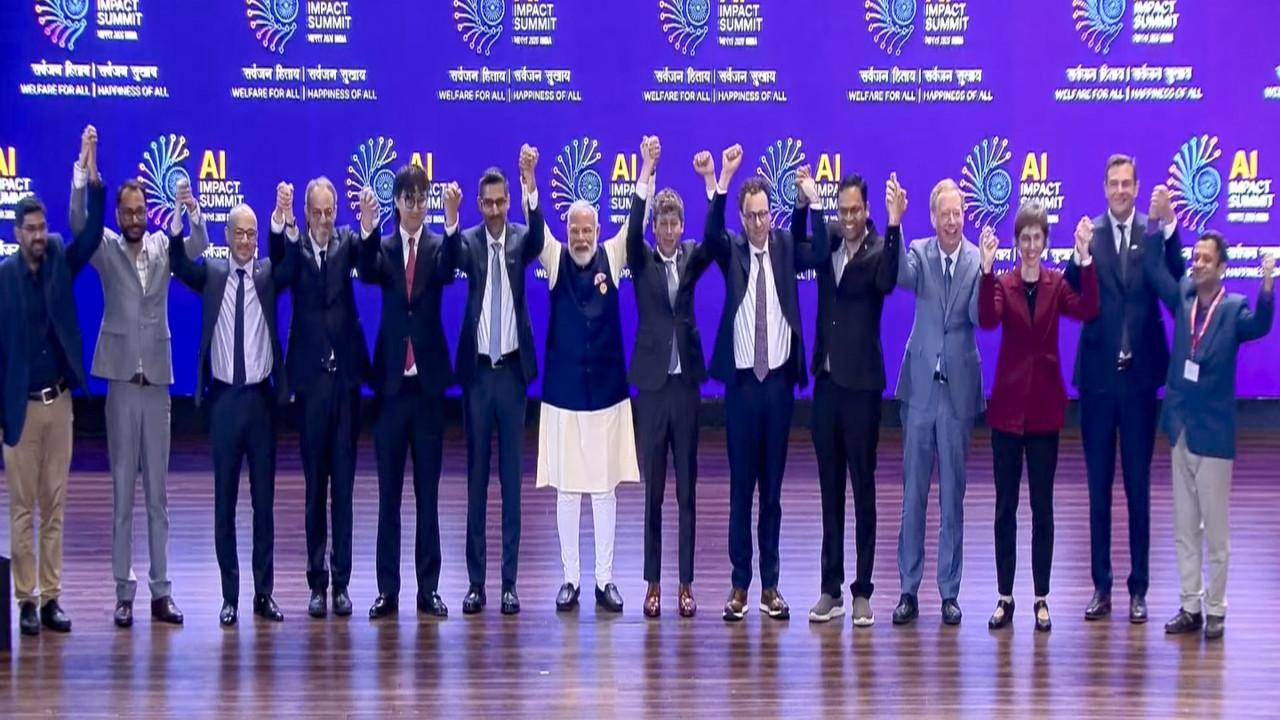
Global AI leaders join PM Modi in a bid to push for a smarter, inclusive future
PM Narendra Modi joins hands with Google CEO Sundar Pichai, OpenAI CEO Sam Altman, and others during the India AI Impact Summit 2026, in New Delhi. PIC/PTI
ADVERTISEMENT