







Home / News / India News / Article /
Devdutt Pattanaik: Rasgullas for Lakshmi
Updated On: 24 January, 2016 09:05 AM IST | | Devdutt Pattanaik
<p>AS a Non-Resident Odia (NRO), I am often asked if rasgulla, the sweet dish, is of Odia or Bengali origin. If I say the sweet dish has Odia roots, will that make me more ‘scientific’ or ‘chauvinistic’? As I look at those expectant eyes and feel the bated breath, I realise I will be judged no matter what I say. All I can present is my truth.</p>

Listen to this article :
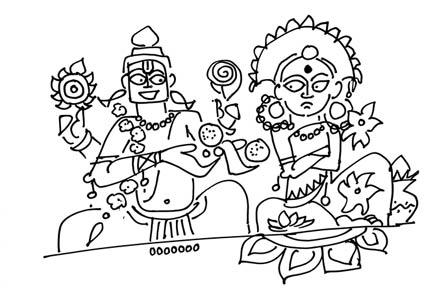
 AS a Non-Resident Odia (NRO), I am often asked if rasgulla, the sweet dish, is of Odia or Bengali origin. If I say the sweet dish has Odia roots, will that make me more ‘scientific’ or ‘chauvinistic’? As I look at those expectant eyes and feel the bated breath, I realise I will be judged no matter what I say. All I can present is my truth.
So, what do we know? Here are some of the facts (all vociferously disputed). Sweets made of split milk (chenna) are popularly known as Bengali sweets, distinguishing them from the sweets made in the rest of India using non-split milk products such as curds, ghee or boiled down milk (khoa). Milk is sacred to Hindus, and so the practice of splitting milk is not considered sacred and is certainly not ceremonial, and not part of the mainstream Hindu discourse. Krishna is fed milk, butter, ghee and curds, never cheese. Even if cheese was known to ancient India, it was clearly not popular.
Read Next Story
Trending Stories
Latest Photos
Latest Videos
Latest Web Stories
ADVERTISEMENT
Mid-Day Fast
ADVERTISEMENT

ADVERTISEMENT