






Home / News / India News / Article /
Budget 2014: Sops galore for common man
Updated On: 11 July, 2014 02:34 AM IST | | Agencies
<p>Income Tax exemptions, focus on generation of jobs and safety of women and senior citizens have put a smile on the common man’s face</p>

Listen to this article :
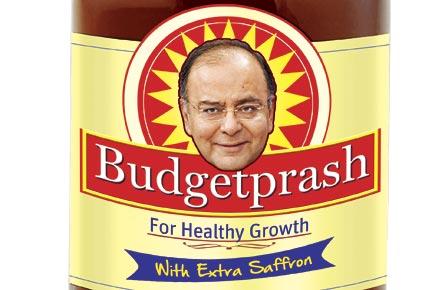
budget jar
New Delhi: Tax payers could save on their salaries, and consumer goods like TVs, soap, footwear, processed food and computers will cost less as the Rs 18-lakh crore maiden budget of Prime Minister Narendra Modi’s government promised to arrest price rise, boost investor mood, cut expenditure and restore India’s growth to 7-8 percent in three years.

During a 128-minute speech in the Lok Sabha by Finance Minister Arun Jaitley, with a five-minute break allowed by Speaker Sumitra Mahajan upon his request due to momentary discomfort, a host of other proposals, both welfare schemes and reformist policy measures, were also unveiled that were aimed at a wide range of stakeholders — from the girl child to senior citizens and overseas investors to the defence forces.
At the same time, he accepted as a challenge — given the state of the flagging economy and rising prices — the task to cut fiscal deficit, which indicates the extent to which the government overspends, to 4.1 percent of GDP for this fiscal, and further to 3.6 percent and 3 percent over the next two years.
“The steps that I will announce in this budget are only the beginning of a journey towards a sustained growth of 7-8 percent or above within the next 3-4 years along with macro-economic stabilisation,” the finance minister said.
“Therefore, it would not be wise to expect everything that can be done or must be done to be in the first budget presented within 45 days of the formation of this government,” he added, setting the agenda for his speech.
“We are going in the right direction to overcome challenges faced in the last decade,” echoed Modi, while congratulating Jaitley for the budget in which he provided a “new ray of hope for the poor and downtrodden sections of society.” It was also in line with the “government’s vision to create a skilled and digital India,” the prime minister said.
Common man happy
“For a change the government has given us importance. I welcome the announcements and hope that the government will take proper care of us,” said Kailash Nihalani, a 72-year-old retired teacher living in west Delhi.
The allocation of R150 crore to improve safety for women in larger cities was applauded by all, especially in the wake of the horrific December 16, 2012, gang rape in the national capital. “I hope this money is spent properly on protecting our mothers, daughters and sisters and making our cities safer for them,” said Rajan Singh, a 32-year-old businessman from Chandigarh.
Meanwhile, the decision to increase excise duty on cigarettes and tobacco products as well as aerated drinks is a step in the right direction, felt many.
“Who needs these colas and cigarettes? They are poison for our health. I know it’s tough to ban them but the next best thing to do is to make them expensive,” said Vivek Sethi, a 30-year-old dietician based in south Delhi.
The news obviously upset smokers, many of whom said that they would have no option but to curtail the number of sticks they smoke, or even kick the butt.
Read Next Story
Trending Stories
Latest Photos
Latest Videos
Latest Web Stories
ADVERTISEMENT
Mid-Day Fast
ADVERTISEMENT

ADVERTISEMENT