






Home / News / India News / Article /
Paromita Vohra: Son preference
Updated On: 27 March, 2016 07:39 AM IST | | Paromita Vohra
<p>As with notions of the nation, so with feelings about family, popular cinema is often the place where new, still-forming ideas are reflected, emotionally managed and normalised.</p>

Listen to this article :
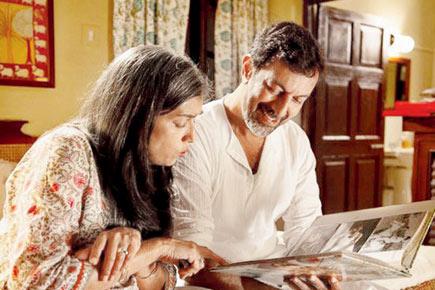
Actors Ratna Pathak Shah and Rajat Kapoor in a still from Kapoor & Sons (since 1921)
 As with notions of the nation, so with feelings about family, popular cinema is often the place where new, still-forming ideas are reflected, emotionally managed and normalised.
Films like Grahasthi (1963), about a man with two parallel families in Meerut and Delhi, responded in part to the anxieties of the Hindu Marriage Act prohibiting polygamy. Films like Waqt and Amar Akbar Anthony, where families are separated by circumstances, and wealth or progress gained but bonds and love lost, spoke to the experiences of families cast asunder by cataclysmic events like Partition as also migration and social strife. Films like Do Raaste expressed the tensions around joint families separating because of lifestyle differences, symbolised by ‘modern’ daughters-in-law while Jai Santoshi Ma responded to the same tensions by incorporating love marriage and couple-dom into a vocabulary of tradition. In post-liberalisation India, film families became exclusively well off, and antagonists disappeared in an orgy of songs, weddings, mobility and sentimental love, exemplified by the films of Sooraj Barjatya and some of Karan Johar’s oeuvre.
Read Next Story
Trending Stories
Latest Photos
Latest Videos
Latest Web Stories
ADVERTISEMENT
Mid-Day Fast
ADVERTISEMENT

ADVERTISEMENT