






Home / News / India News / Article /
Pollution levels higher in Delhi this Diwali compared to last year
Updated On: 16 November, 2020 10:30 AM IST | New Delhi | PTI
The contribution of stubble burning in Delhis PM2.5 concentration was 32 per cent on Diwali day this year as compared to 19 per cent last year

Listen to this article :
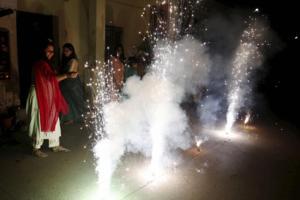
Due to rising air pollution and risk of spike in Covid infections, various states and Union Territories across the country have either imposed a complete ban on fire crackers on Diwali or permitted them with heavy restrictions. Pic/PTI
Pollution levels were higher in Delhi this Diwali as compared to last year and it could be attributed to bursting of firecrackers, higher share of stubble burning and unfavourable meteorology during the festival season, according to the Central Pollution Control Board. In a special report, the apex pollution watchdog said almost all pollutants reported higher values on Diwali this year as compared to 2019.
"Pitampura recorded an increase in PM and SO2 indicating impact of firecracker bursting on Diwali day," it said. As observed from real-time monitoring network, the hourly average concentration of PM2.5 started increasing from 11 pm on Sunday.
Trending Stories
Latest Photos
Latest Videos
Latest Web Stories
ADVERTISEMENT
Mid-Day Fast
ADVERTISEMENT

ADVERTISEMENT