






Home / News / India News / Article /
Ravi Shankar Prasad: The wily counsel of Modi's Digital India minder
Updated On: 31 May, 2019 03:00 PM IST | | PTI
Years later, Prasad was the lead lawyer in the Public Interest Litigation against the former Bihar chief minister in the fodder scam case

Listen to this article :
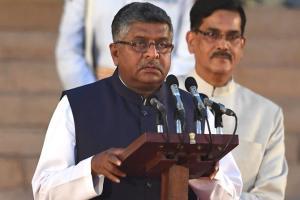
Ravi Shankar Prasad
New Delhi/Patna: From a counsel holding the brief for the deity 'Ram Lalla' in the Ayodhya title suit to a moderniser spearheading the 'Digital India' initiative and clamping down on contentious practices like instant triple talaq, BJP leader Ravi Shankar Prasad has worn many hats. Winning his maiden election against colleague-turned opponent Shatrughan Sinha from Patna Sahib seat in Bihar by more than 2.84 lakh votes, 65-year-old Prasad is among the few BJP leaders who have been a minister in every NDA government that came to power at the Centre in last two decades. Hailing from an RSS background, the lawyer-turned-politician rubbed shoulders with Gandhian-Socialists during Emergency, sharing a jail cell with Lalu Prasad Yadav. The two were office bearers in the Patna University students union during the turbulent 1970s but they later ideologically drifted apart. Years later, Prasad was the lead lawyer in the Public Interest Litigation against the former Bihar chief minister in the fodder scam case.
Prasad continued to practice law and politics in the BJP, rising to fame as one of the junior ministers in the Atal Bihari Vajpayee Cabinet. He was Minister of State in the departments of Coal and Mine and Law and Justice. But his most memorable stint was as the Information and Broadcasting minister when he initiated reforms in the radio, television and animation sectors. When Modi first swept to power in 2014, he was first given the ministries of telecom and information technology and electronics. Later, he was divested of the telecom portfolio. He held the portfolios of law and justice as well as electronics in the outgoing government. In Modi 2.0 government, he has again become a Cabinet minister. Prasad sworn in as Cabinet minister Thursday. In the first stint under Modi, the government's flagship Digital India programme was implemented under his watch and drove several initiatives to galvanise electronics and mobile handset manufacturing in the country. Mobile phone manufacturing units in India increased to 120 in 2018 from just 2 in 2014. In the same period, annual production of mobile handsets increased from 60 million units to 225 million units, creating one lakh direct jobs.
Trending Stories
Latest Photos
Latest Videos
Latest Web Stories
ADVERTISEMENT
Mid-Day Fast
ADVERTISEMENT

ADVERTISEMENT