






A bitter truth behind the white sheets
Updated On: 19 December, 2022 07:34 AM IST | Mumbai | Dharmendra Jore
City sherpas may have tried to mask the real face of Mumbai when the G20 delegates came calling, but the citizens know it was a whitewash paid for by the taxpayers’ money

Listen to this article :
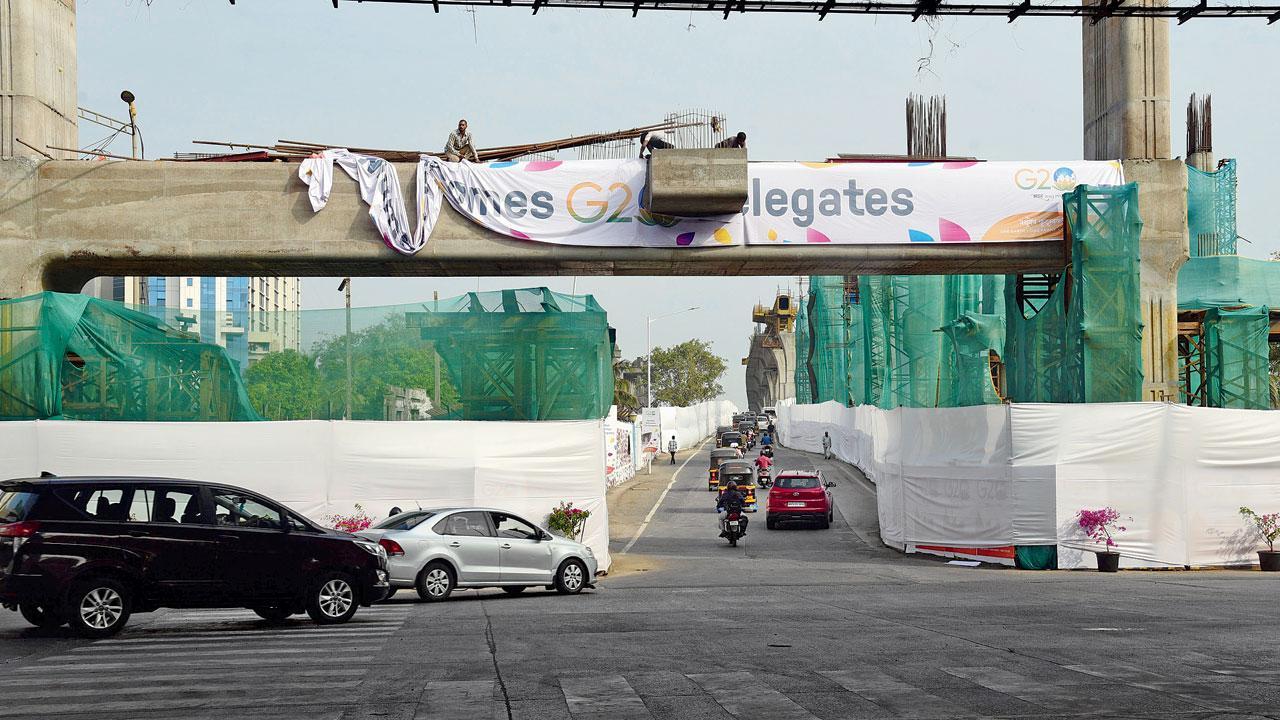
White sheets set up on the sides of Western Express Highway ahead of the G20 Summit. Pic/Pradeep Dhivar
 The more you hide the more it shows. It’s a story behind the curtains that were pulled over the sidelines of the roads that led to G20 Summit venues in the city. The purpose of white sheets spread over many kilometres was to mask the real face of Mumbai—the one we know of. The city administration didn’t want the G20 delegates to see it. The bumpy roads were put in order, potholes filled, the side walls painted wherever they were slatelike. Dwarf, dirty and dilapidated had no standing as the swanky, glass facade and fully air-conditioned towers showcased Mumbai’s other face. It happened as if the learned delegates visiting the city didn’t know about its slums, urban poverty and substandard living conditions. Alas, the city sherpas couldn’t mask the feeling the citizens had while watching the whitewash job that was done with their tax money.
Do cities like Mumbai need to be portrayed as they aren’t really? Why can’t we present them as what they are? To cover up our failure to upgrade them and accommodate increasing urbanisation with a good investment and vision? Coincidentally, yet another Mumbai makeover plan took off these days.
Read Next Story
Trending Stories
Latest Photos
Latest Videos
Latest Web Stories
ADVERTISEMENT
Mid-Day Fast
ADVERTISEMENT

ADVERTISEMENT