






A dream of togetherness
Updated On: 11 July, 2021 06:58 AM IST | Mumbai | Paromita Vohra
We alleviate this loneliness by integrating ourselves in relationships, consolidating our fragments in dreams. Sometimes those dreams are movies

Listen to this article :
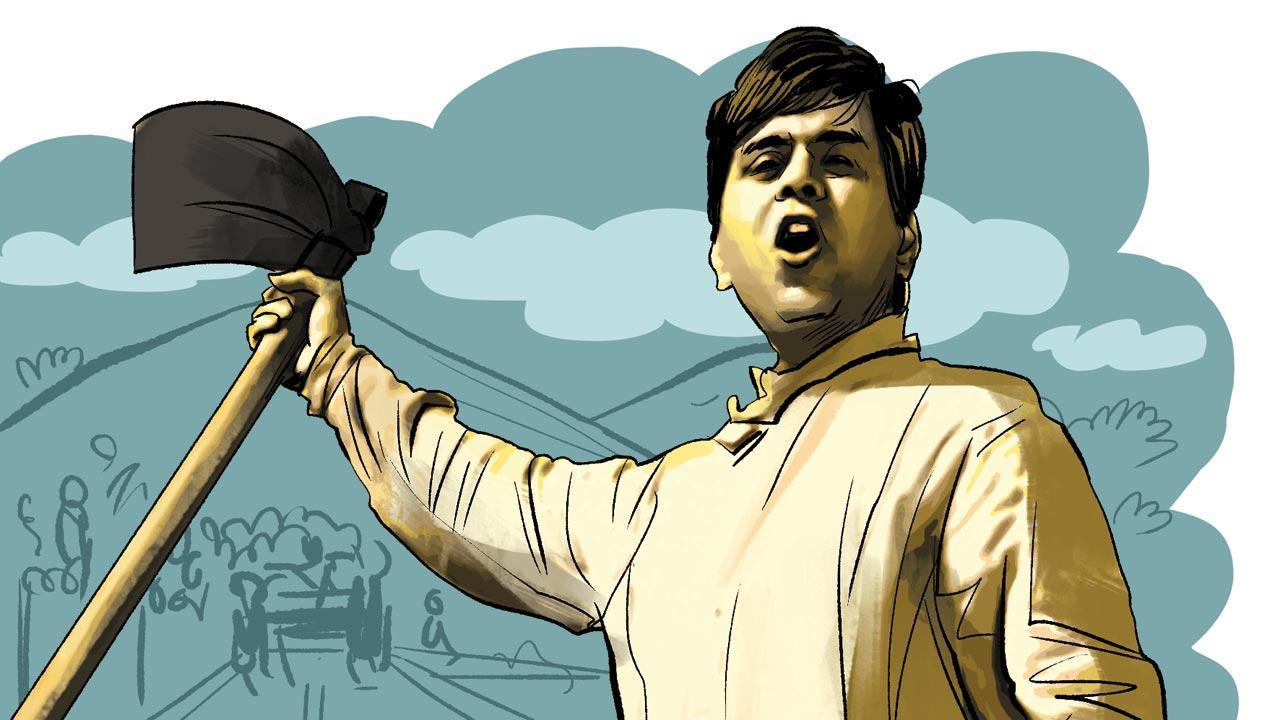
Illustration/Uday Mohite
 As I have never been a Dilip Kumar fan—I wondered about the strange sadness I felt at his death. Standing atop the young hill of the 21st century, the passing of monumental figures of the 20th century, evokes a sense of time rolling away from us, like mists over mountains in Madhumati. Nostalgia seeks to present time and people as absolutes. So, did Dilip Kumar shape the times, or did the times shape Dilip Kumar? Well, does kal mean yesterday or does it mean tomorrow? Time is always as incomplete as are we, who are simply bits of time—life-time—longing for lost yesterdays, anxious for fulfilling tomorrows, a little lonely in the today. We alleviate this loneliness by integrating ourselves in relationships, consolidating our fragments in dreams. Sometimes those dreams are movies.
An iconic Dilip Kumar film, Naya Daur presents a dream of togetherness. In it the advent of capitalist thinking—valuing profit and efficiency above people and relationships—disturbs an apparently harmonious village. When money singularly determines all meaning, it threatens not only livelihoods but emotions. A romantic misunderstanding between two friends is fuelled (scaled up?) by the capitalist spirit so that friendship becomes suspicion and competition, causing Ajit to cry out at one point “Mera koi dost nahin hai” (No one is my friend), voicing the anxiety of what development will mean for our collectivities. Finally though, co-operation triumphs over competition, restoring the collective, in an apparently happy ending.
Read Next Story
Trending Stories
Latest Photos
Latest Videos
Latest Web Stories
ADVERTISEMENT
Mid-Day Fast
ADVERTISEMENT

ADVERTISEMENT