






A Heavenly watch, for the most part
Updated On: 18 August, 2023 06:50 AM IST | Mumbai | Rosalyn D`mello
Despite its failure to credit Yashica Dutt and one questionable casting choice, Made in Heaven, gets a lot right. The series skilfully taps into individual subjectivities while commenting on societal norms

Listen to this article :
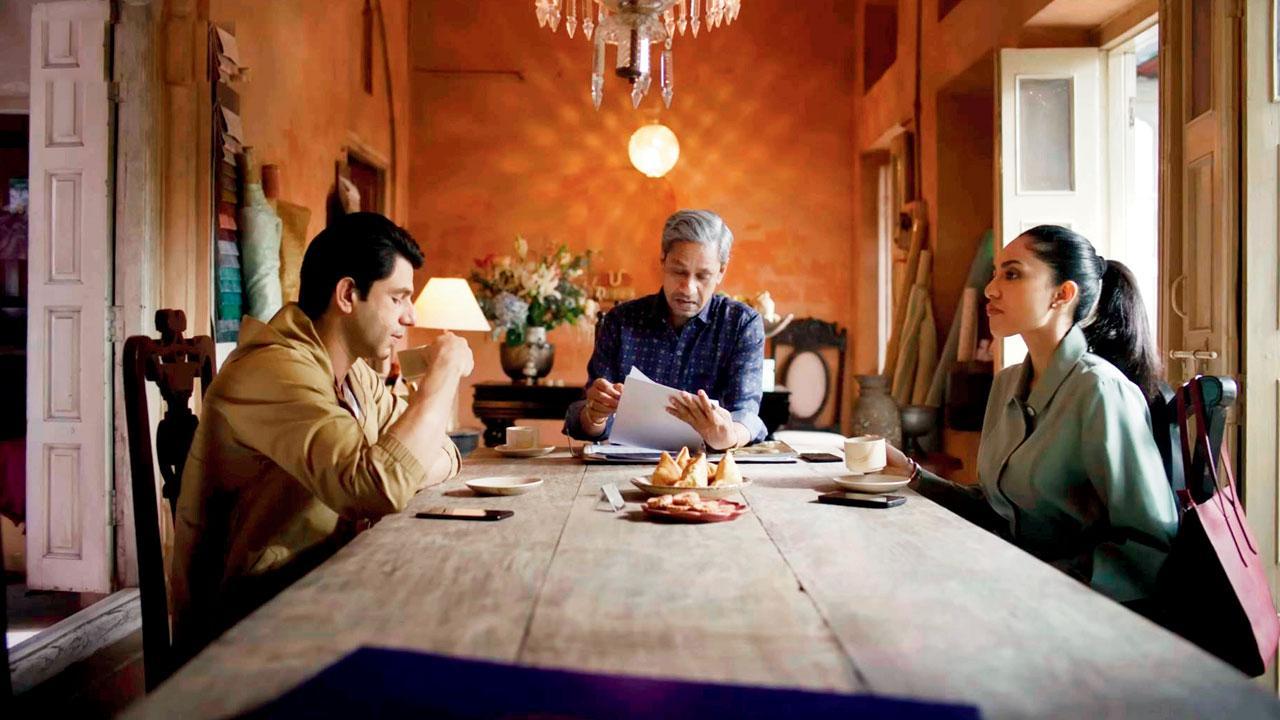
A still from the Amazon Prime Video series Made in Heaven. Pic/Youtube
 Was I the only viewer that felt very unconvinced by the casting decision in the first episode of the second season of ‘Made in Heaven’? The character, Sarina, faces regular jibes from her mother and her to-be mother-in-law because she is allegedly dark-skinned. However, on screen, in my opinion, she totally ‘passed’ as fair, and I couldn’t detect any difference between her complexion and the others. The lead protagonist, Tara did often seem darker, but Sarina blended in with the rest. Was the series hoping to explore how even white-passing Indian skin can interpreted as not fair enough? I’ve been feeling very confused about it. More so because my skin is undoubtedly dark. I could never ‘pass’ as white. And I have felt discriminated because of it all my life. So, it rang somewhat shallow to me, this casting decision. I wanted to empathise with the character who is being told what to wear and how to lighten her skin so she doesn’t stand out, even though she is the bride, but I found I couldn’t. I had my own limitations.
I’m only two episodes in. Thankfully, the second felt a lot more solid. In fact, watching it I felt amazed at the directors’ and writers’ ability to juggle so many compelling storylines over the narrative arc of a little-over-60-minute span. Of course, I am processing the series’ failure to credit Yashica Dutt, the author of the landmark memoir, ‘Coming Out as Dalit’ as the inspiration for one of the most celebrated episodes. I am aware that it isn’t news that Dalit intellectual women are often robbed of their labour. I’m hoping that the producers and directors will make that right. And I am also learning from the immense grace with which Dutt called them out for their erasure of her life experiences. I cannot even imagine what it must be like to somehow see their life so closely reflected on screen but positioned in a way that invisibilises them from the equation. It would be a pity if this was left unaddressed, because, apart from this grievous error and despite the questionable casting decision in the first episode, there is so much that the series gets right.
Read Next Story
Trending Stories
Latest Photos
Latest Videos
Latest Web Stories
ADVERTISEMENT
Mid-Day Fast
ADVERTISEMENT

ADVERTISEMENT