






Airplanes, chor bazaars and Bangkok jugaad
Updated On: 24 March, 2024 06:55 AM IST | Mumbai | Paromita Vohra
One of my companions learned from a stall owner that some sellers in the market were children of sex workers from around the area and this was now a space of livelihood for them, a story that piqued our imaginations.

Listen to this article :
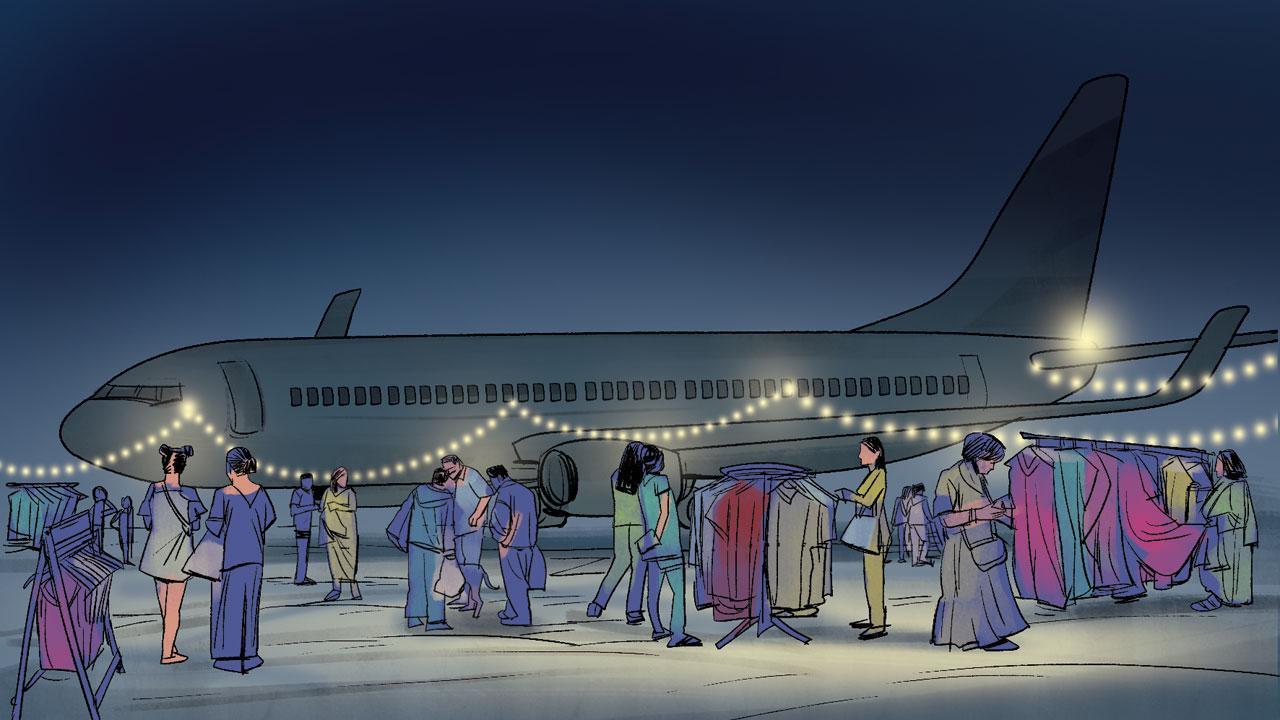
Illustration/Uday Mohite
 In a field off the city-centre in Bangkok, sits a decommissioned airplane—the surreal centre piece of Chang Chui, one among the city’s famed night markets. Shops, bars and stalls surround it like puppies at the teats of a creature who might be either from a mythic past or a dystopian future.
South East Asia’s night markets are an inclusive kind of leisure. The night air more conducive to grazing, browsing, timepass. Tourism reformats everyday life into conveyor belt consumption. So, in more touristy destinations, such markets sometimes feel as uninspiring as malls with repetitive and predictable wares. It’s not unlike how every Indian holiday spot now has a standardised “hippy” market with elephant print cotton pyjamas, straw hats, Kashmiri handicrafts, tie-and-dye sundresses. Chang Chui provides a pleasurable contrast with its eclectic, affordable stalls and the airy plenitude of space to stroll without being hustled. There’s a conscious but understated “cool” aesthetic to the informal architecture of corrugated iron and old wood. Indeed a playful, beautiful place which keeps its own hipness in check.
Read Next Story
Trending Stories
Latest Photos
Latest Videos
Latest Web Stories
ADVERTISEMENT
Mid-Day Fast
ADVERTISEMENT

ADVERTISEMENT