






Ambedkar’s pact with a Hindutvadi
Updated On: 30 December, 2024 07:18 AM IST | Mumbai | Ajaz Ashraf
The architect of the Constitution railing against Hindu Raj while also being conflicted about Dalits adopting Christianity or Islam as this would ‘denationalise’ them exemplifies his life of contradictions

Listen to this article :
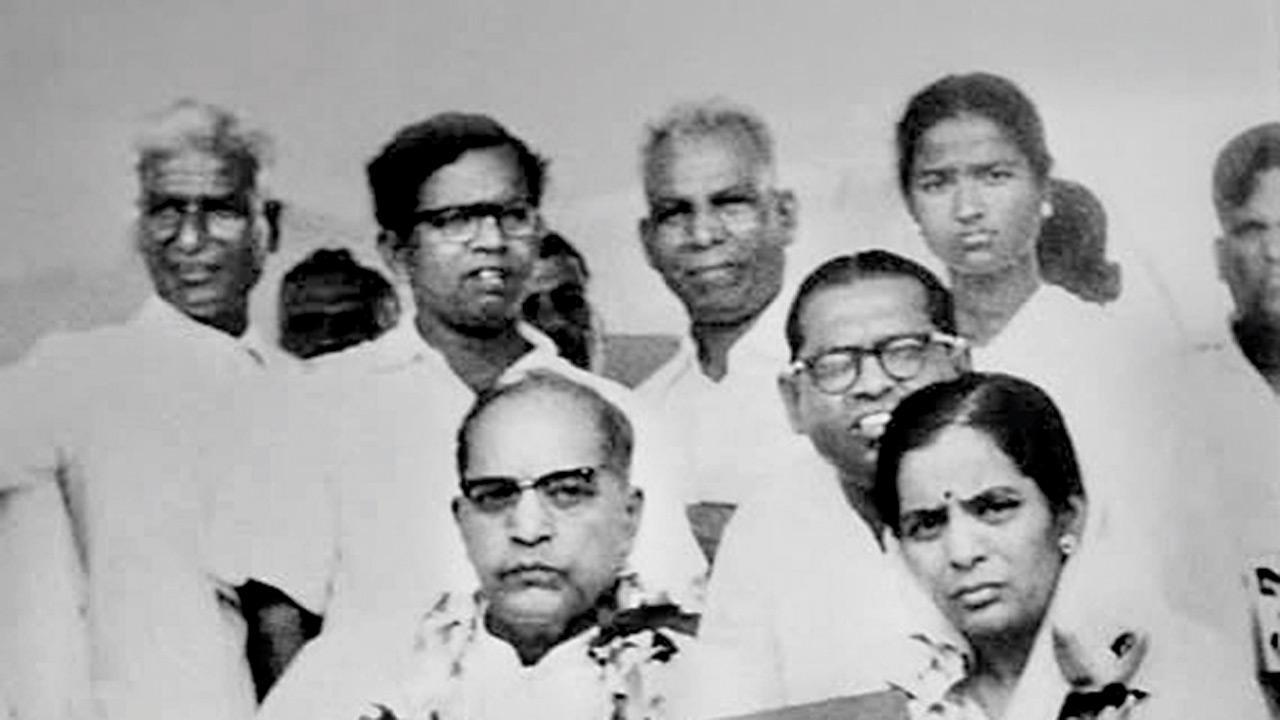
Dr Babasaheb Ambedkar converted to Buddhism along with his wife Savita and over three lakh followers in Nagpur on October 14, 1956
 Political leaders jousting to prove their love for Ambedkar should read Anand Teltumbde’s Iconoclast: A Reflective Biography of Dr Babasaheb Ambedkar. In this book, they will discover that Ambedkar was a man of contradictory parts. Nothing illustrates this more vividly than his decision to enter into a pact on religious conversion with Hindu Mahasabha leader B S Moonje, whose disdain for the Depressed Classes, as the so-called ‘Untouchables’ were then classified, was revolting. A February 1936 entry in Moonje’s diary bears this out: “Any money spent on untouchables is like feeding a garden-serpent.”
The genesis of their pact dates to October 13, 1935, when, at Yeola, Ambedkar declared that though he was born a Hindu, he shall not die as one. Hindu nationalists panicked at the thought of Ambedkar and his followers leaving Hinduism, for in that era, the population of every religious community determined representation in the legislatures. For this reason, there ensued a scramble among leaders of other faiths to woo him.
Read Next Story
Trending Stories
Latest Photos
Latest Videos
Latest Web Stories
ADVERTISEMENT
Mid-Day Fast
ADVERTISEMENT

ADVERTISEMENT