Autopsy of marriage
Updated On: 17 March, 2024 06:55 AM IST | Mumbai | Meenakshi Shedde
While being a solid, nuanced, feminist autopsy of the institution of marriage, its format is a murder mystery that is as much a whodunit as a whydunit; a courtroom drama and thriller.





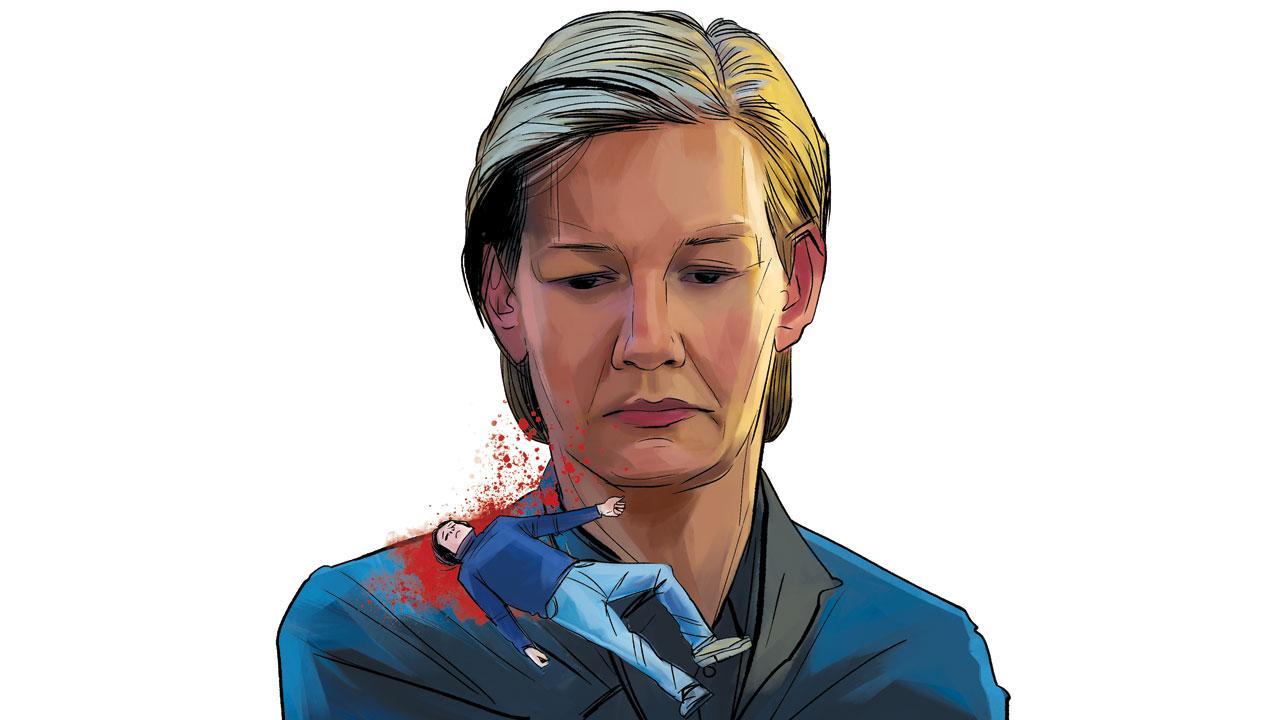
Illustration/Uday Mohite
 Justine Triet’s Anatomy Of A Fall is still in Indian theatres nationwide at the time of writing—glory be! It is rare for a film directed by a woman, that too a foreign language film (French), to earn five Academy nominations for Best Picture, Best Director (Justine Triet), Actress (Sandra Hüller), Editing and Writing- Original Screenplay—for which it eventually won an Oscar, for Justine Triet and her partner and co-writer Arthur Harari. Sweet revenge, as, despite winning the Palme d’Or at the Cannes Film Festival in 2023, France snubbed the film, sending another film as its official Oscar entry.
The film is about how, on the death of an unsuccessful, aspiring writer Samuel (Samuel Theis), his grieving widow Sandra (Sandra Hüller) is immediately suspected as the murderer—especially because she is unusually unapologetic both about her success as a writer, and refuses to be her husband’s slave in the marriage, whether in raising their son or in keeping house. In India, she would promptly be branded a chudail, or witch, without trial; here, France has a legal trial, yet it reveals the same hammerhead approach towards women more successful than their husbands. While being a solid, nuanced, feminist autopsy of the institution of marriage, its format is a murder mystery that is as much a whodunit as a whydunit; a courtroom drama and thriller.
Trending Stories
Latest Photos
Latest Videos
Latest Web Stories
ADVERTISEMENT

Ganeshotsav 2026

ADVERTISEMENT